

The Asian Bankers Association (ABA), in collaboration with LexisNexis Risk Solutions, organized a webinar on the Philippines' Anti-Financial Account Scamming Act (AFASA), focusing on its implications for financial institutions and practical measures to strengthen fraud prevention. The successful webinar gathered 1,080 registrants from 41 countries.
(1) Introduction
Moderated by Alexander Ngo of LexisNexis Risk Solutions, the webinar featured Tai Vo, Director of Market Planning for Fraud and Identity, Asia Pacific, at LexisNexis Risk Solutions, and Derick Adil, Senior Director and Head of AI, Data, and Privacy Governance at Globe Telecom. Discussions covered emerging fraud threats, digital identity intelligence, money mule detection, artificial intelligence, and cross-industry cooperation.
(2) Presentation by Tai Vo, LexisNexis Risk Solutions
Emerging Fraud Trends and Regulatory Developments
Tai Vo highlighted the growing sophistication and international nature of financial fraud. Drawing on the LexisNexis Risk Solutions Cybercrime Report, he noted that the company processed 142 billion transactions in 2025. Across Asia-Pacific, human-initiated attacks increased by 36%, while bot attacks rose by 39%, significantly outpacing legitimate transaction growth.
He identified emerging threats including fraud-as-a-service marketplaces, money mule recruitment, increasingly complex digital identities, and AI-enabled scams. These developments require financial institutions to strengthen their detection capabilities and cooperate across borders.
Tai also reviewed the Philippines' regulatory framework, including Bangko Sentral ng Pilipinas Circular No. 1140 in 2022, AFASA's enactment in 2024, and Circular No. 1213 in 2025. These measures strengthened requirements for real-time fraud monitoring, authentication, and suspicious transaction detection.
Detecting Money Mules and Suspicious Transactions
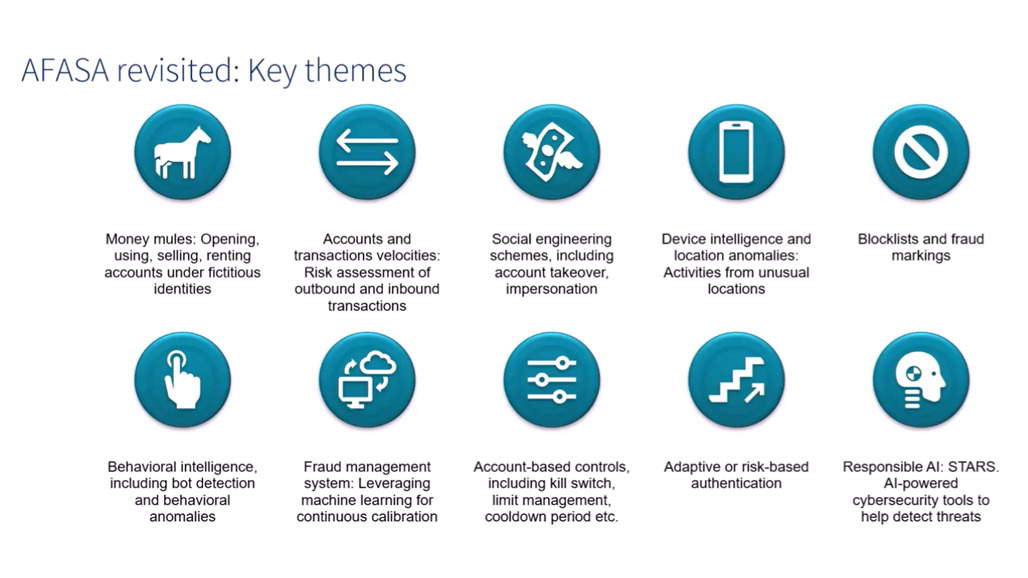
Tai emphasized that money mule accounts facilitate the movement and concealment of fraudulent proceeds. He distinguished between complicit mules, recruited mules, and individuals whose accounts are exploited without their knowledge.
An analysis involving nine banks found that 54% of identified mule accounts were less than six months old, while 18% had existed for more than two years. These findings demonstrate that both newly established and longstanding accounts can be exploited.
Effective detection requires examining account age, transaction velocity, device associations, geographic anomalies, and beneficiary relationships. Tai stressed that banks should monitor incoming and outgoing payments and identify suspicious patterns across interconnected accounts rather than assessing transactions individually.
Digital Identity and Behavioral Intelligence
Tai explained that legitimate customers establish recognizable patterns involving devices, locations, login credentials, and transaction behavior. Account compromises may produce sudden changes, including unfamiliar devices, unusual locations, and frequent account modifications.
Behavioral intelligence strengthens detection by examining typing patterns, mouse movements, extended pauses, and remote-access activity. These indicators can help identify account takeovers and scams involving victims who receive instructions from criminals while using their own trusted devices.
He emphasized that combining digital identity and behavioral intelligence enables banks to detect suspicious activities that conventional authentication systems might overlook.
Risk-Based Authentication and Customer Protection
Tai explained that AFASA and Circular No. 1213 encourage stronger, risk-based authentication without imposing a blanket prohibition on SMS or email one-time passwords. He recommended combining passive authentication, digital identity intelligence, and behavioral analytics to assess risks continuously. Suspicious transactions may trigger biometric verification, additional documentation, or temporary restrictions. This adaptive approach allows banks to strengthen security while minimizing inconvenience for legitimate customers.
(3) Panel Discussion
Strengthening Cross-Industry Coordination
Derick Adil emphasized that the principal challenge in combating fraud is often insufficient coordination rather than a lack of technology. Scams frequently originate on digital platforms, continue through telecommunications networks, and result in transfers across financial institutions.
Citing estimated annual scam losses of PHP 120 billion in the Philippines, he advocated stronger information sharing, common procedures, faster escalation, and clearly defined responsibilities. Tai agreed that fraud intelligence must extend beyond individual organizations and national borders.
Integrating Fraud Indicators into Operational Decisions
Tai explained that machine learning and clustering techniques can identify emerging risks, improve fraud assessments, and reduce unnecessary alerts. Banks must also understand the underlying reasons behind risk scores to support effective decisions.
Derick highlighted telecommunications indicators such as SIM changes, mobile number reassignment, and unfamiliar devices. However, individual indicators should not automatically be considered evidence of fraud. Institutions should assess combinations of suspicious activities while ensuring that information sharing complies with data privacy requirements.
Identifying Money Mule Networks
The speakers emphasized that money mule activities may appear legitimate when individual transactions are examined separately. Banks must therefore analyze account relationships, device information, customer behavior, and transaction networks.
Tai identified warning signs including newly established accounts, unusual login activity, multiple devices, and rapid transfers to unfamiliar beneficiaries. Derick cautioned that some account holders may have been deceived or coerced, requiring proportionate intervention and appropriate investigation.
Artificial Intelligence and Customer Trust
Derick explained that AI can strengthen fraud detection but also enables criminals to create convincing messages, clone voices, generate synthetic identities, and automate scams.
He identified four essential governance requirements: accountability, testing, meaningful human oversight, and documentation. Institutions must remain responsible for AI-supported decisions and be able to explain their outcomes.
To maintain customer trust, he recommended stronger digital identity infrastructure, trusted communication channels, and secure verification through banking applications. Tai emphasized employee training to counter AI-assisted fraud.
Developing a Coordinated Industry Response
Derick identified common case management as a priority for improving cross-industry cooperation. He recommended standardized reporting, shared case references, agreed escalation procedures, designated contacts, and clear response timelines.
Rather than immediately developing a national technology platform, institutions should establish practical coordination arrangements. Tai added that standardized data formats and reliable information are essential for effective collaboration.
Both speakers stressed that success should be measured by timely intervention and financial losses prevented.
(4) Questions and Answers
How can banks distinguish legitimate customers from account takeovers and remotely coached transactions?
The speakers recommended combining device intelligence, geographic anomalies, transaction patterns, and behavioral analytics. Individual indicators rarely provide sufficient evidence of fraud.
How should banks balance stronger authentication with customer convenience?
The panel advocated adaptive authentication, allowing routine transactions to proceed with minimal friction while suspicious activities trigger additional verification or temporary restrictions.
Can customer trust be maintained as AI-generated fraud becomes more convincing?
The speakers emphasized stronger verification infrastructure, trusted communication channels, and reliable mechanisms for reporting scams. Customer education should complement these protections.
Are institutions focusing too heavily on detection rather than prevention?
The panel stressed that prevention, detection, and response must form an integrated strategy involving digital platforms, telecommunications providers, and financial institutions throughout the scam process.
What should institutions prioritize over the next 90 days?
Derick recommended cross-institutional scam simulations to test response procedures and accountability. Tai highlighted fraud's broader economic consequences, noting that total costs can reach seven times the direct financial loss.
(5) Key Takeaways
- Strengthening fraud prevention: Banks should integrate digital identity intelligence, behavioral analytics, transaction monitoring, and risk-based authentication.
- Improving industry coordination: Cooperation among banks, telecommunications companies, digital platforms, and regulators is essential for identifying and disrupting fraud networks.
- Ensuring responsible AI adoption: AI-powered fraud detection requires accountability, effective governance, human oversight, and customer protection.
- Measuring effectiveness: Institutions should focus on scams prevented, response times, financial losses avoided, and coordinated intervention.
A copy of the presentation files is available to ABA members only.
A recording of the webinar is available at the ABA YouTube channel.