

The Asian Bankers Association (ABA) and Temenos, an ABA Associate Member, held successfully the webinar on Unlocking the Future of Wealth Management: AI, Data & Digital Transformation held on 4 June 2026.
About 200 registrants from 29 countries joined the pre-recorded 45-minute session moderated by Eric Mellor, Wealth Management Specialist, Temenos, featuring Adam Quek, CFA, Head of Digital Advisory, United Overseas Bank (UOB); Minh Duc Le, Managing Director, Synpulse; and Tomoko Nasuho, Account Director, Evooq, who explored how AI, data, and digital innovation are reshaping the wealth management industry.
Summary
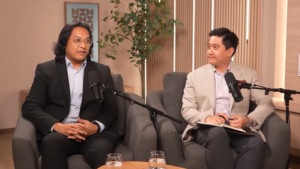 Eric Mellor highlighted key structural shifts, noting that “customers want to change the way that they interact with their private bankers.” The discussion emphasized that transformation in wealth management is not only technological but also strategic and client-centric. A recurring theme was the need to balance innovation with trust in a regulated environment. Institutions must rethink engagement models while maintaining strong client relationships.
A key focus was the shift in client expectations toward hybrid engagement models combining digital convenience with human advisory. Adam Quek stressed that “we’re still in the relationship business… that touch with the RM is super important,” reaffirming the central role of trust.
While mass affluent clients favor digital self-service, high-net-worth clients continue to value personalized advisory, though the next generation increasingly expects both. Banks must therefore deliver seamless omnichannel experiences that integrate digital tools with human interaction. Technology should enable faster, more personalized advice while reducing administrative burdens. This allows relationship managers to focus on higher-value client engagement.
AI’s role in advisory was discussed as an enabler rather than a replacement for human expertise. Tomoko Nasuho emphasized that “you build trust over time,” highlighting the limitations of purely digital engagement. AI tools can enhance productivity by translating complex analytics into actionable insights and natural language.
However, Quek cautioned that “you can never be sure it’s not going to hallucinate,” stressing the need for guardrails, structured data, and human oversight. AI is most effective when layered on top of rule-based frameworks and used in the “last mile” of communication. This approach ensures both consistency and personalization while maintaining control in a regulated setting.
Data readiness emerged as a critical challenge, with Minh Duc Le noting that “most of the organizations are still stuck on the first step, making sure that the data is there, and the data’s in good quality.”
Without strong data foundations, AI cannot scale effectively. Banks must prioritize data governance, integration, and a clear “source of truth” to support reliable outputs. As a result, many institutions are focusing on internal productivity use cases before expanding to client-facing applications. This cautious approach reflects both regulatory constraints and the need to maintain trust. Data remains the backbone of successful digital transformation.
The panel also highlighted the need for evolving operating models and agile transformation strategies. Quek emphasized a service-first mindset, stating that “the answer was not use the LLM to do the investment advisory reasoning… what does best-in-class advisory look like?” Banks must move away from periodic transformation cycles toward continuous iteration and innovation. This includes investing in new capabilities such as data science and AI engineering while preserving the central role of human advisors. In this context, AI acts as a “lever” that amplifies RM expertise.
The shift requires organizations to be more adaptive and responsive to change. From a technology perspective, the move toward open and modular architectures was identified as a key trend. Minh Duc Le pointed out that legacy systems and lack of API readiness remain significant barriers, while the growing number of fintech solutions increases complexity. He warned that “if you don’t make a decision, that’s probably the wrong decision,” highlighting the urgency of transformation.
A workflow-driven approach can help banks align technology with business needs and avoid “paralysis of analysis.” Strategic clarity is essential in navigating the expanding ecosystem. Flexibility and speed are becoming critical success factors.
The discussion also addressed changing client segmentation and broader industry trends. Banks are moving beyond traditional AUM-based models toward persona-driven segmentation, recognizing clients with high engagement and growth potential. At the same time, multi-banking behavior and rising financial literacy are increasing competition and complexity.
The panel also noted trends such as wealth migration, demand for holistic advisory services, and growing interest in alternative investments for diversification. These developments require banks to expand their offerings while maintaining strong advisory capabilities. Ultimately, success will depend on combining technology, data, and human expertise to deliver a differentiated client experience.
Key Takeaways
- Hybrid engagement is essential: Clients expect seamless integration of digital tools and personalized advisory.
- AI enhances, not replaces, advisors: Strong guardrails and human oversight remain critical.
- Data is the foundation: High-quality, structured data is required before scaling AI initiatives.
- Continuous transformation is key: Agile, modular, and workflow-driven operating models are now necessary.
The video recording of the session is available at the ABA YouTube channel.