
Introduction
The two-day in-person Regional Workshop by Fintelekt Advisory Services and the Asian Bankers Association (ABA) on Effective Transaction Monitoring and High-Quality STR Reporting, held in Bangkok on 17-18 September 2026 brought together regulatory perspectives and practical experience to examine how organisations can move beyond technical compliance towards more effective financial crime detection and reporting.
Financial crime is evolving rapidly, and with it, the expectations placed on financial institutions to identify, investigate and report suspicious activity effectively. Across two days, the workshop explored the changing financial crime landscape, emerging typologies, transaction monitoring practices, regulatory expectations and the role of high-quality suspicious transaction reports in generating useful financial intelligence.
The programme was practical and interactive, combining expert presentations with case studies, group discussions and exercises. A recurring theme was the importance of curiosity; looking beyond individual alerts and transactions to understand the wider context, identify patterns and consider the people and criminal activity that may sit behind the movement of funds.
DAY ONE SESSION
The Evolving Financial Crime Landscape
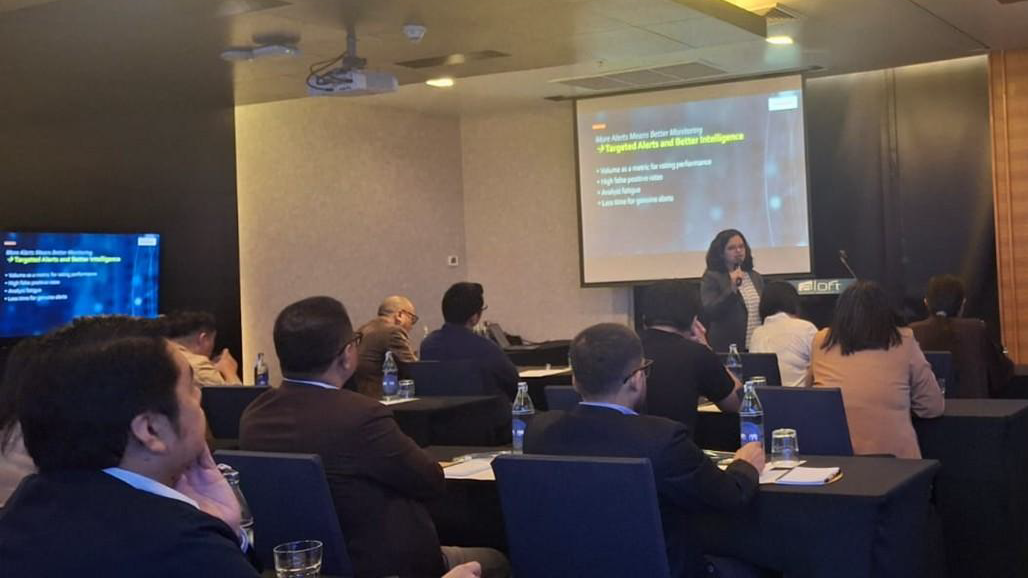
Arpita Bedekar, Chief Operating Officer, Fintelekt opened the workshop by examining The Evolving Financial Crime Landscape: The 7 Shifts in Transaction Monitoring.
The session challenged participants to reconsider some of the assumptions that have traditionally shaped transaction monitoring. More alerts do not necessarily mean better monitoring, and the size or nature of an individual transaction cannot always tell the full story. Effective monitoring increasingly requires context: understanding the customer, their behaviour, transaction patterns and connections to the wider financial ecosystem.
The session also explored the changing behaviour of financial criminals. Criminals may actively seek anonymity, paperless transactions, speed and channels where reporting requirements are limited. Understanding what criminals are looking for can help institutions think differently about vulnerabilities and design more relevant monitoring approaches. The discussion set the tone for the rest of the workshop: transaction monitoring should not simply identify unusual transactions; it should help institutions understand potential financial crime.
Changing Regulatory Expectations and the Value of STRs
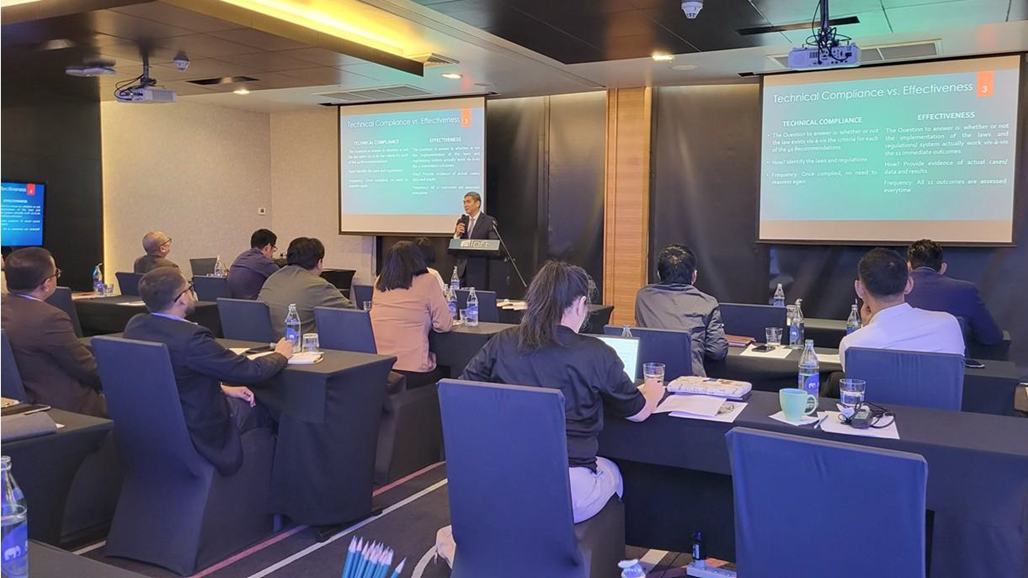
Atty. Mel Georgie B. Racela, Partner - Quial Ginez Beltran & Uy Law Office and Former Executive Director - Anti Money Laundering Council (AMLC) Philippines focused on effective transaction monitoring and high-quality suspicious transaction reporting, with particular emphasis on changing regulatory expectations and preparing for inspections and effectiveness assessments.
A key theme was the distinction between technical compliance and effectiveness. Having policies, procedures and controls in place is important, but regulators and FIUs are increasingly interested in whether those measures actually contribute to identifying and addressing financial crime.
The discussion examined the role of the private sector in contributing to FATF Immediate Outcomes 1 and 6, including through customer risk assessment, ongoing monitoring, CTRs, STRs, training and record keeping.
A significant part of the session focused on what makes an STR valuable and useful to regulators and FIUs. Participants explored how raw transaction information can be turned into a clear narrative that explains the relevant activity, the reasons for suspicion and the wider context.
The Philippine experience of using STR data in the fight against online sexual abuse and exploitation of children (OSAEC) provided an important practical illustration of the potential impact of financial intelligence. It demonstrated how information generated by financial institutions can contribute to a much wider effort to identify and disrupt serious criminal activity.
Effective Transaction Monitoring in Practice
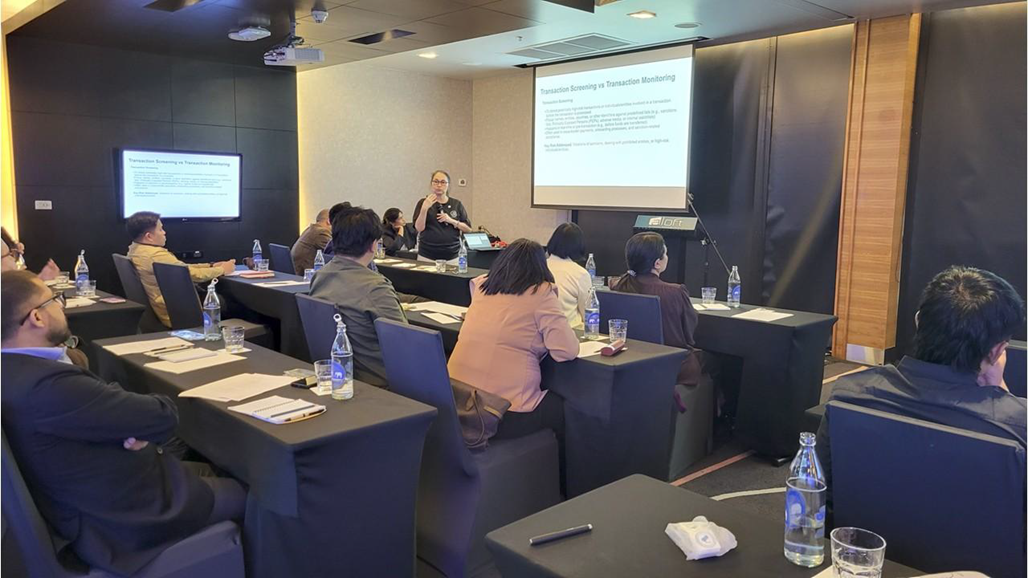
Julia Chin, Trainer, Fintelekt took participants deeper into the practical aspects of transaction monitoring, beginning with the CDD value chain and how customer information and risk assessment provide essential context for monitoring activity.
The session examined the anatomy of mule networks, including rapid transit funnels and the aggregation of funds from task scam victims. Participants considered how apparently unrelated transactions can form part of a larger network and why investigators need to look beyond individual alerts.
The growing intersection between traditional financial institutions and virtual assets was another important area of discussion. Topics included VASP handshakes, P2P bridge accounts, the Travel Rule and systemic spillover risks, highlighting how funds can move across different channels and ecosystems.
Julia also focused on triage discipline and alert fatigue. With compliance teams managing increasingly large volumes of alerts, the challenge is not simply to process more alerts, but to identify which activity warrants deeper investigation. Concepts such as the 30-day velocity envelope provided participants with practical ways of thinking about transaction behaviour and customer context.
DAY TWO SESSION
The second day moved from detection to reporting, beginning with the question: “To report or not to report?” Participants explored what makes an STR defensible and how investigators can turn raw transaction logs into concise, meaningful and regulator-ready narratives. The sessions also covered the post-STR stage, including governance, tipping-off, proportionality and ongoing customer risk management, as well as record keeping and data privacy.
Learning Through Interaction
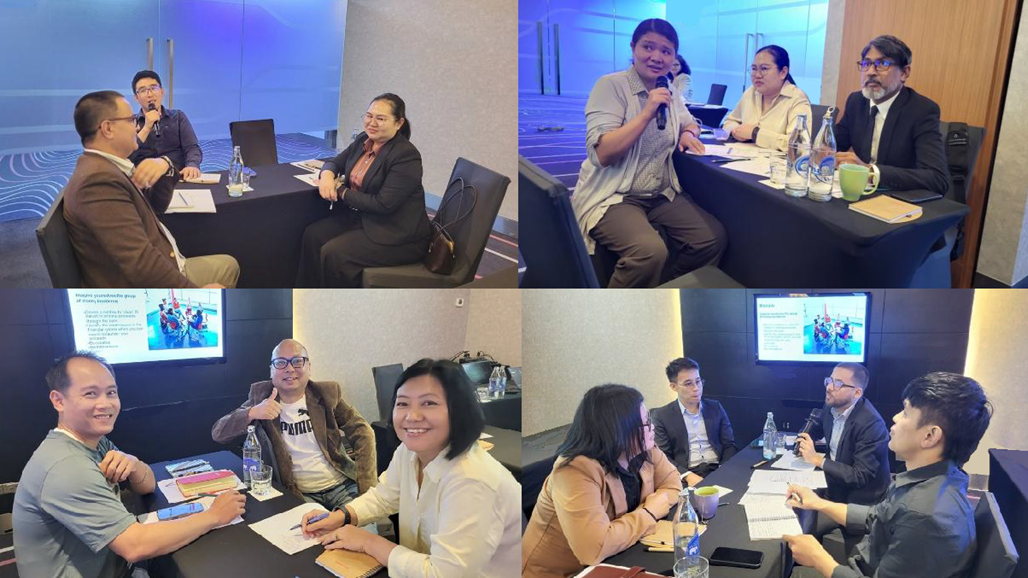
Throughout the workshop, participants were encouraged to apply the concepts to practical situations rather than simply absorb information. Case studies and group discussions created opportunities to consider different perspectives and approaches, while an interactive exercise around alert management and data gathering brought some of the challenges of transaction monitoring to life.
The objective was not just to build technical knowledge. The workshop sought to motivate and sensitise participants to the human impact of financial crime, while encouraging greater curiosity about what may sit behind the transactions they review.
Whether the underlying activity involves scams, mule networks, virtual assets or exploitation, financial crime ultimately affects real people. Connecting the technical aspects of transaction monitoring and STR reporting with these wider consequences can help compliance professionals see their role not simply as fulfilling a regulatory obligation, but as contributing to the broader financial intelligence and financial crime prevention ecosystem.
Across the different sessions, one message came through consistently: effective financial crime compliance requires looking beyond the process itself to the outcomes it produces.
For transaction monitoring teams, this means moving beyond alerts to context and patterns. For investigators, it means developing curiosity and asking better questions. For STR teams, it means producing information that is clear, meaningful and useful to those who receive it.
Ultimately, the workshop reinforced the importance of moving from “Are we compliant?” to “Are we effective?” and ensuring that transaction monitoring and suspicious transaction reporting contribute to meaningful action against financial crime.