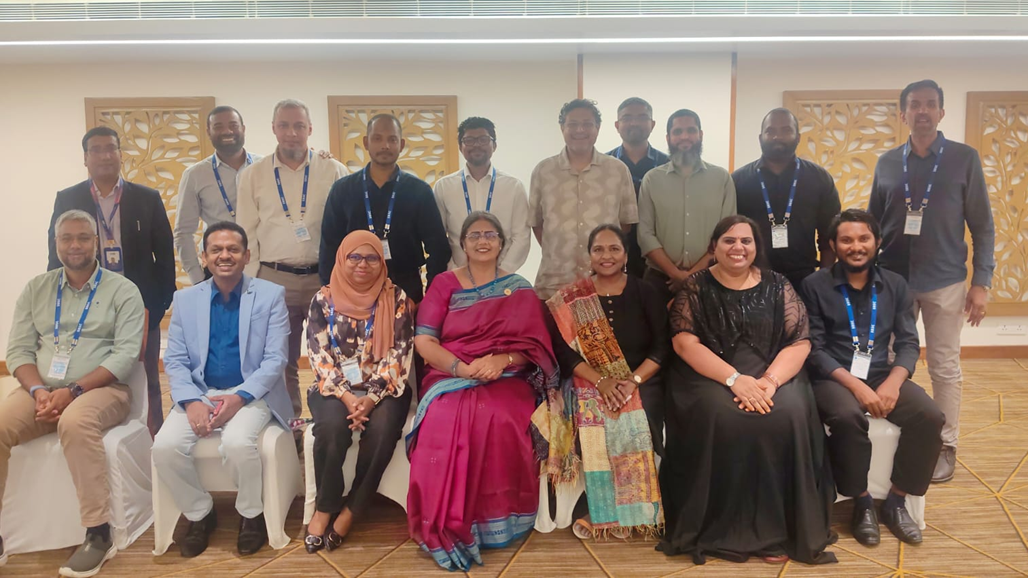
 The two-day ABA-SBI Short-Term Visiting Program themed “Digital Leadership Summit 2026” held on 4-5 August 2026 in Hyderabad, brought together 15 banking delegates from Bangladesh, Maldives and Sri Lanka, representing four financial institutions, for an intensive programme of presentations, discussions and interactive exchanges on developments shaping the regional banking industry.
Across eight sessions, participants examined artificial intelligence, blockchain and digital currency, financial inclusion, organisational performance, risk and compliance, trade finance, agricultural finance, and next-generation AML/KYC controls. Cultural activities at the conclusion of the day provided additional opportunities for informal interaction and networking.
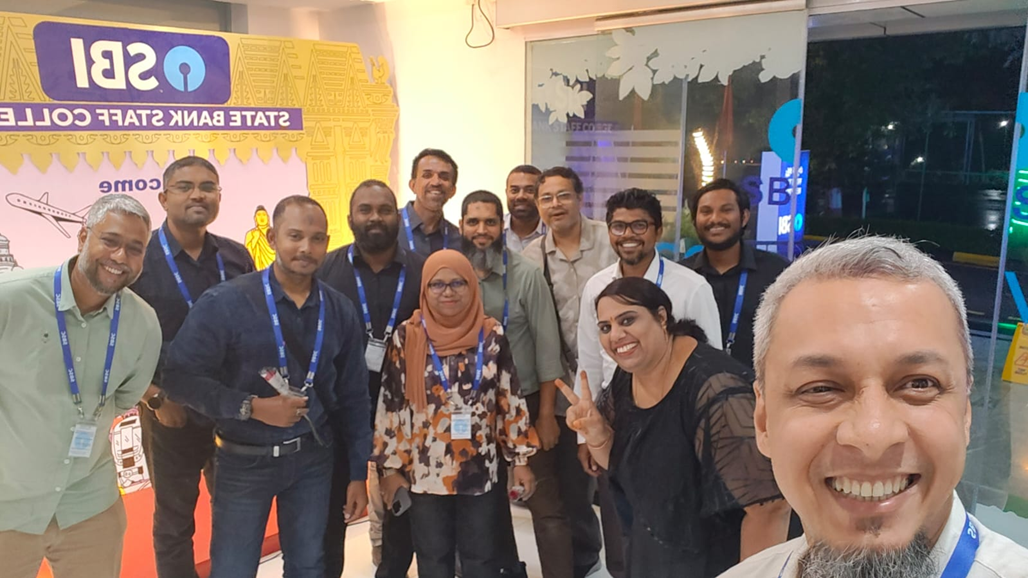
 The programme concluded with a visit to SBI’s largest branch in Hyderabad, where delegates observed branch operations and customer services, followed by a tour of the SBI Museum. The museum preserves century-old banking ledgers, traditional inks and other historical memorabilia, providing an interesting contrast between the long heritage of Indian banking and the technology-driven future explored throughout the programme.
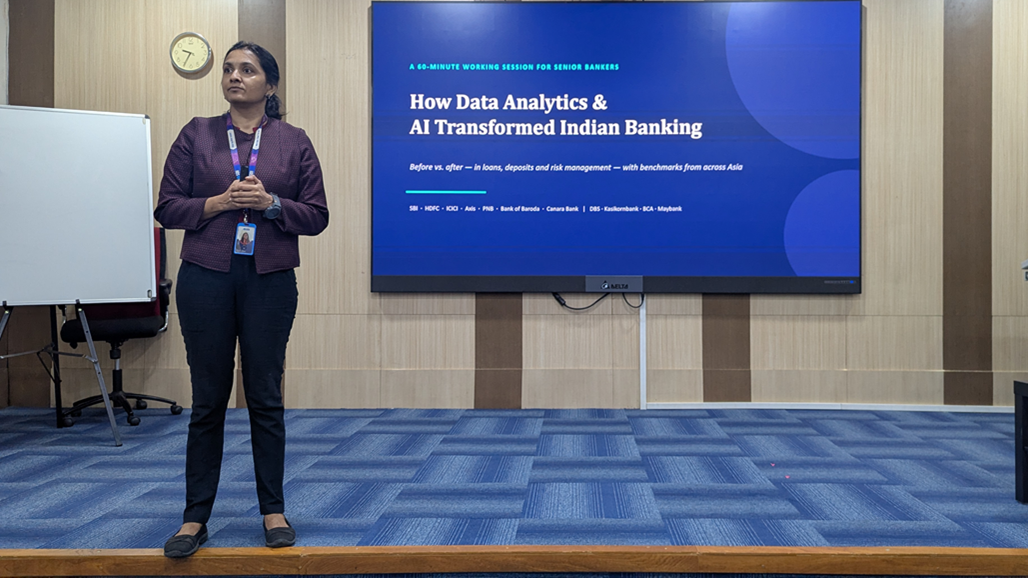
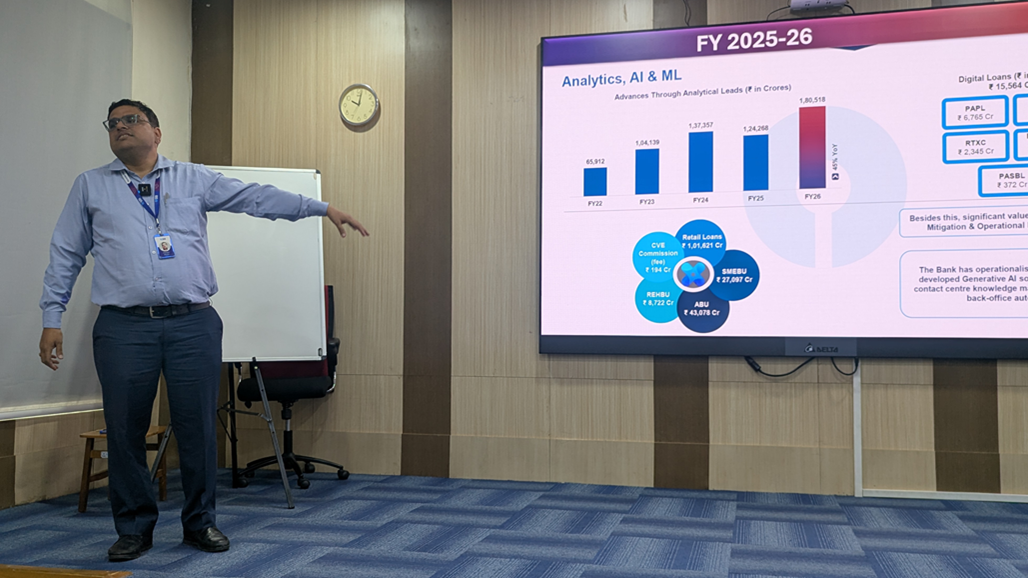
Session 1 – Harnessing Data Analytics and AI: Data Analytics and AI Use Cases
Presented by Deepa Balakrishnan, Faculty, and Abhinav Agarwal, Chief Manager
The session examined how data analytics, AI and machine learning are transforming banking through predictive models supporting lending, customer segmentation, fraud detection and personalised services. SBI’s scale is significant, with more than 53 crore customers (approximately 530 million) and over 10 crore registered YONO users (approximately 100 million). YONO, which stands for “You Only Need One,” is SBI’s integrated digital banking platform, offering customers access to a wide range of banking and financial services through a single digital channel. This extensive customer base and digital reach generate enormous quantities of data that can support more informed decision-making.
Traditional underwriting processes requiring 7–15 days are increasingly supplemented by models using GST data, UPI transactions and bank statements, while pre-approved personal loans can be delivered through YONO in just three clicks. Early-warning systems help identify potential defaults, while machine-learning models support AML, fraud monitoring and recovery management across different lending portfolios.
SBI reported analytical leads supporting around ₹1.8 lakh crore (approximately US$18.8 billion) in advances during FY2025–26, including approximately ₹15,564 crore (about US$1.63 billion) in digital loans, representing about 8.6% of this total. AI is also being used for account acquisition, cross-selling, customer service and internal knowledge support through the GenAI-powered SBI platform.
Session 2 – Blockchain Synergies and the Rise of Digital Currency
Presented by DBV Kumar, Chief Manager, and Abhinav Agarwal, Chief Manager
The speakers introduced blockchain as a transparent and immutable distributed ledger capable of reducing duplication, tampering and dependence on central intermediaries. Potential applications include trade finance, KYC/AML, lending, securities settlement, supply chains, land records and government payments. India’s National Blockchain Framework was launched in 2024 to support wider adoption.
The Digital Rupee (e₹) was a major focus. Unlike UPI (Unified Payments Interface), which transfers commercial bank balances, e₹ is sovereign money and a direct liability of the RBI. India had more than 7 million retail CBDC customers, 400,000 merchants and 19 participating banks. SBI alone accounted for over 944,000 customers and 36,000 merchants, approximately 13% and 9%, respectively, of the totals presented.
Programmable digital currency can restrict funds according to purpose, merchant, location or expiry date, making it useful for subsidies, agricultural support and other targeted payments. Together with Aadhaar-based wallets, offline capability, UPI interoperability and blockchain-based records, CBDCs could improve transparency and reduce leakage.
Session 3 – Inclusive Finance, Sustainable Future: Bank’s Role in India’s SDG Agenda
Presented by Sudhir Kumar Jha, Chief Manager
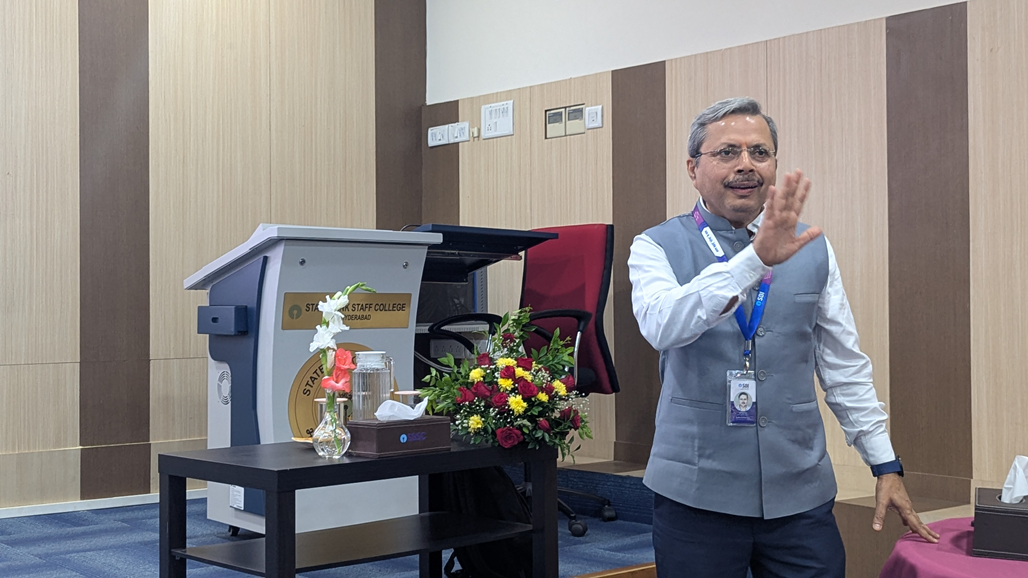
The presentation traced India’s financial inclusion journey through four phases, beginning in 1969 with nationalisation and branch expansion, followed from 2005 by no-frills accounts, business correspondents, Kisan Credit Cards and ICT banking. The 2014–2024 period accelerated inclusion through PMJDY, Aadhaar, UPI, AEPS and Direct Benefit Transfers.
From 2025 onward, the emphasis has been shifting toward Financial Inclusion 2.0, which focuses not merely on opening accounts but on usage, service quality, financial wellbeing, AI-enabled banking and customer protection. The National Strategy for Financial Inclusion 2025–2030 similarly emphasises universal usage, gender inclusion, financial education, livelihood linkages and stronger consumer protection.
Financial inclusion was directly connected with the Sustainable Development Goals through savings, credit, insurance, agricultural finance, health protection, women’s financial participation, MSME lending and entrepreneurship. Banks therefore play an important role in both financial access and broader economic development.
Session 4 – Building High-Performing Organisations
Presented by MJ Christy, Faculty Director, and Kiranmai Nittala, Faculty Assistant Director
The session identified trust and psychological safety as critical foundations of high-performing organisations. Trust develops through open communication, accountability, clarity and consistent behaviour, while effective leaders create an environment where employees can contribute ideas and challenge assumptions without fear.
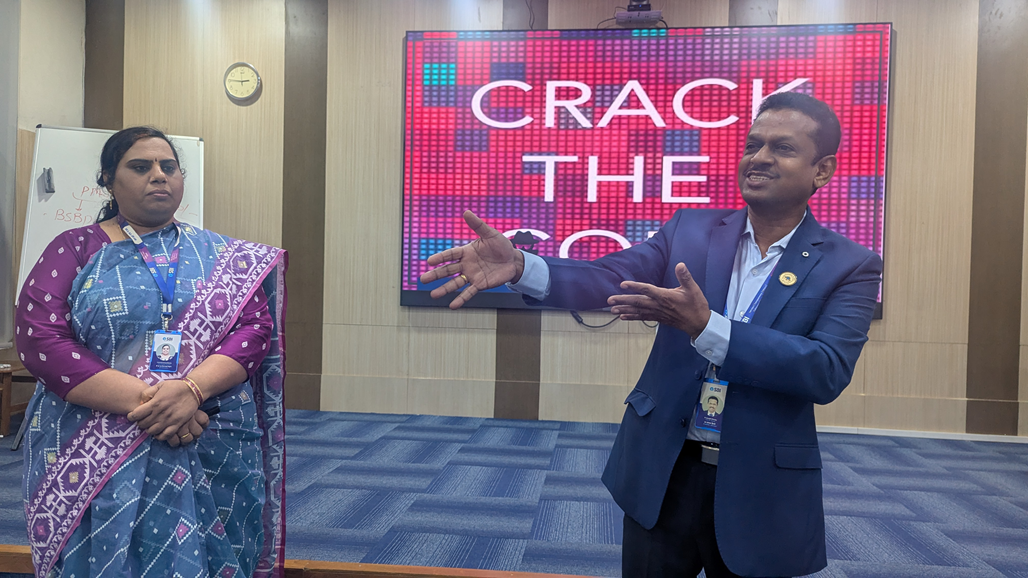
Participants were divided into four groups for an interactive exercise. Midway through the task, instructors suggested that each group might contain a “spy.” Suspicion quickly disrupted cooperation and some participants began identifying colleagues they believed were manipulating their teams.
The instructors later revealed that there had never been any spies. The exercise demonstrated how easily suspicion can damage teamwork and reinforced the importance of transparent leadership, clear roles, recognition and an organisational culture built on trust.
Session 5 – Compliance and Risk Management: Safeguarding India’s Banking Future
Presented by Krishnan Diwakaran, Assistant General Manager
The session treated risk management, compliance, culture and fraud prevention as elements of one integrated banking risk ecosystem. It reviewed eight major risks—credit, market, liquidity, operational, reputational, strategic, compliance and cyber risk—while noting the growing importance of operational and technology-related risks.
The Three Lines of Defence model was explained: business units own risk, risk and compliance functions provide independent oversight, and internal audit provides assurance to the Board. Effective implementation requires independence and clear accountability across all three lines.
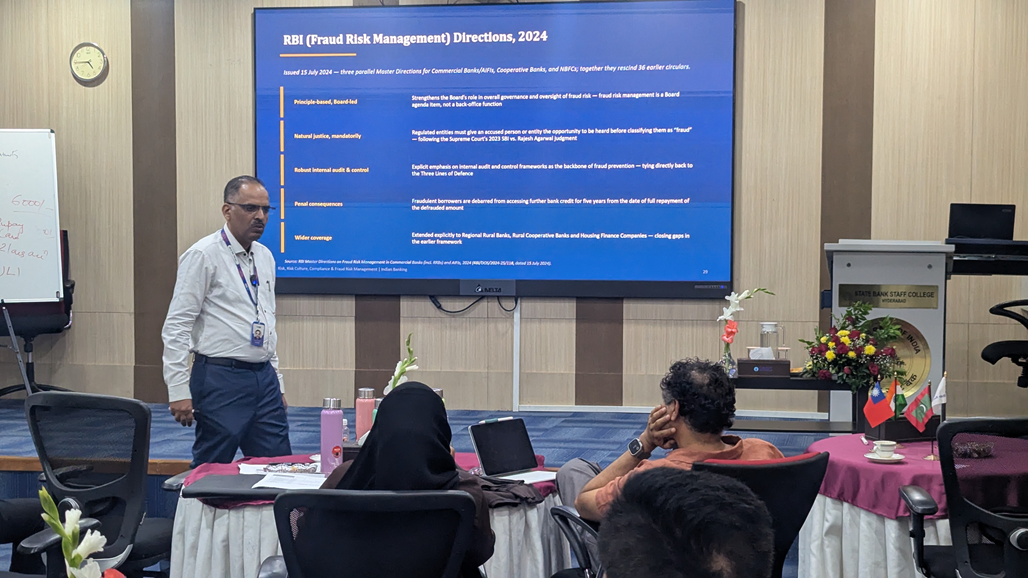
India’s prudential regulation, risk-based supervision, ICAAP and Prompt Corrective Action framework were also discussed. The RBI’s 2024 Fraud Risk Management Directions strengthen Board oversight, early-warning systems and accountability. The central message was that risk culture, compliance, governance and fraud controls must function together rather than as separate activities.
Session 6 – SME & Trade Finance: India’s Performance and Bank’s Role
Presented by Rahul Sah, Chief Manager
Global trade reached approximately US$35 trillion in 2025, while India recorded combined merchandise and services exports of around US$860 billion in FY2025–26 against approximately US$979 billion in imports, producing a trade deficit of about US$119 billion. Exports therefore covered roughly 88% of imports.
India’s growing international trade was linked to the Viksit Bharat 2047 ambition and the country’s large consumer market and expanding working-age population. Services exports remain an important strength, partially offsetting the merchandise trade deficit.
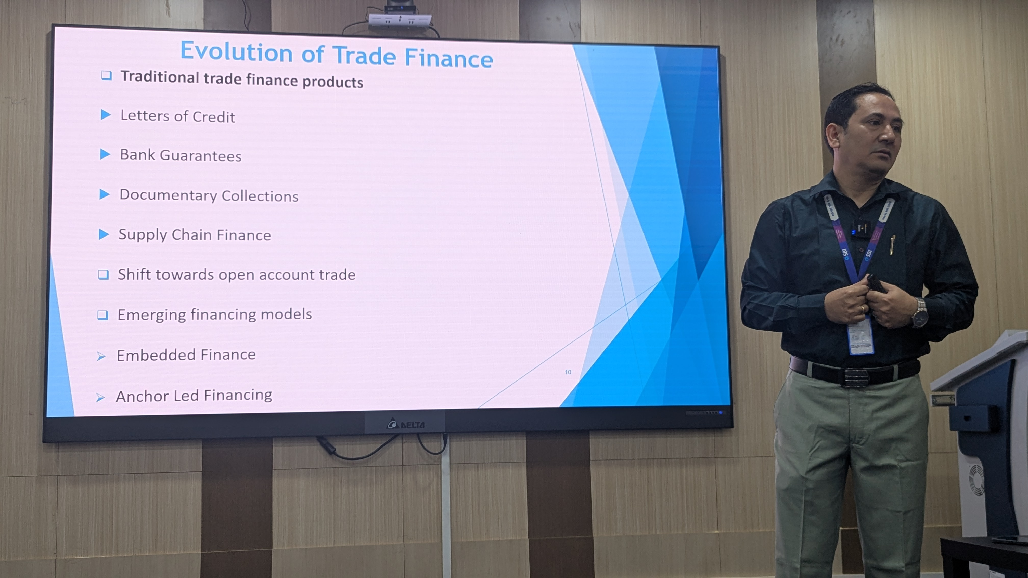
Trade finance is meanwhile evolving from traditional letters of credit, guarantees and documentary collections toward open-account trade, embedded finance, anchor-led financing and digital platforms. Electronic documentation, electronic bills of lading and AI-assisted document scrutiny are making trade finance increasingly digital, while banks remain vital providers of liquidity and payment-risk mitigation.
Session 7 – Strengthening India’s Agricultural Ecosystem: Finance and Best Practices
Presented by Arun S, SBI Staff College
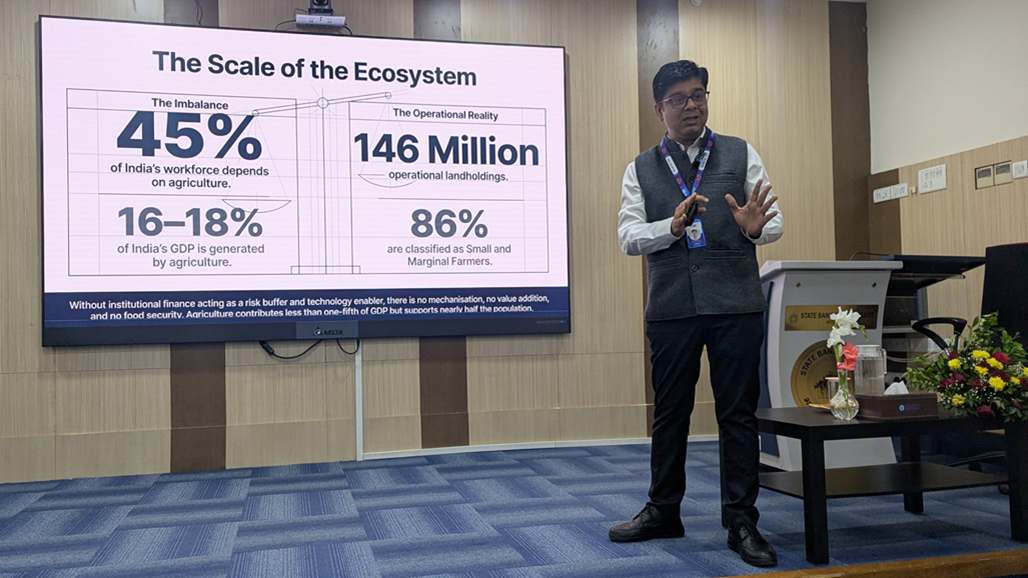
Agriculture supports approximately 45% of India’s workforce but generates only 16–18% of GDP. India has around 146 million operational landholdings, approximately 86% of which are small and marginal farms—equivalent to about 126 million holdings. These figures illustrate the scale of the challenge facing agricultural finance.
The sector faces post-harvest losses, infrastructure gaps, dependence on intermediaries, limited long-term finance and slow technology adoption. Banks are therefore shifting from isolated crop lending toward ecosystem financing through Farmer Producer Organisations, crop clusters, satellite monitoring, geo-tagging and digital land records.
The Kisan Credit Card, with more than 70 million active accounts, remains a key agricultural credit channel. Cluster financing and convergence models combining bank credit, government subsidies, insurance and technical support can reduce transaction costs and risk while supporting investments such as solar pumps, micro-irrigation and sustainable farming.
Session 8 – Next-Gen Compliance: AI/ML for KYC, AML, and CFT
Presented by RSG Prakash, Chief Manager and DBV Kumar, Chief Manager
The session examined the increasing use of AI and machine learning in KYC, AML and counter-terrorist financing. Money laundering was discussed as the process through which illegal proceeds from activities such as corruption, cybercrime and trafficking are disguised through financial transactions and integrated into the legitimate economy.
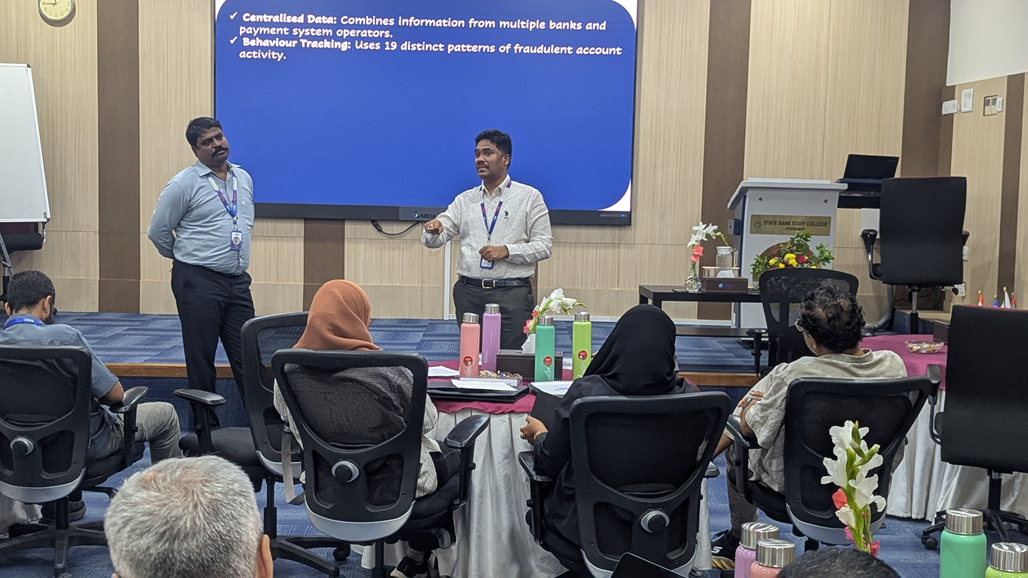
A major focus was MuleHunter.AI, which uses centralised data, behavioural analytics, network analysis, pattern recognition and risk scoring to detect suspicious money mule accounts. AI allows banks to analyse actual account behaviour rather than relying solely on static customer information and can generate early warnings when unusual activity develops.
The speakers also highlighted the burden of KYC and re-KYC, FATCA and CRS requirements, and high-value transaction monitoring. Digital processes can reduce manual verification while improving compliance. The overall direction is toward continuous, data-driven monitoring, combining AI and machine learning with enhanced due diligence and human judgement.