
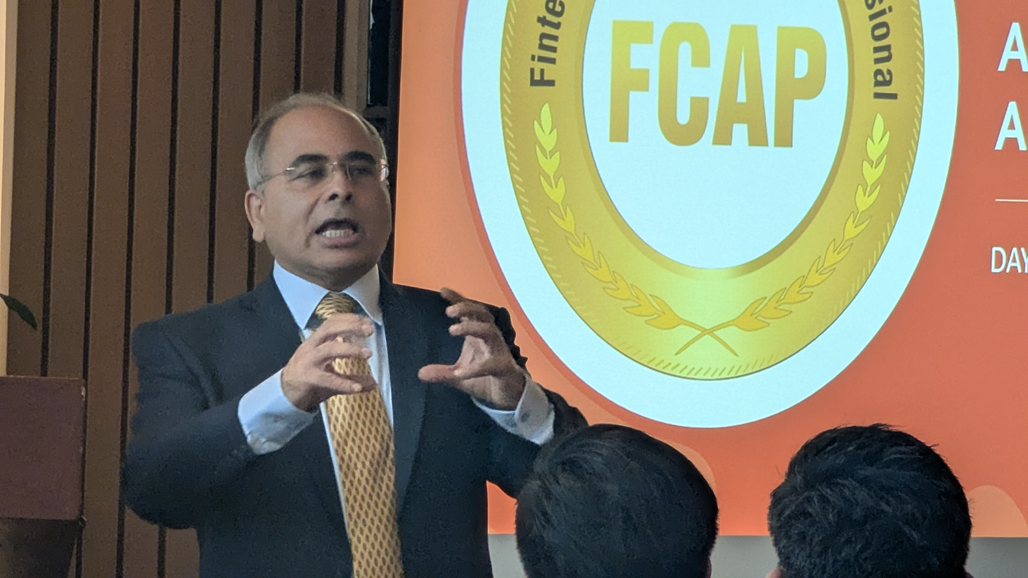
The Fintelekt Certified AML/CFT Professional (FCAP) Training Programme, held in Manila on 28–29 July 2026, in association with the Asian Bankers Association, was a two-day, country-specific, in-person programme designed to bring together professionals at the forefront of AML/CFT compliance, risk management, and financial crime prevention. The programme equipped participants with practical insights into the evolving financial crime landscape, effective risk mitigation strategies, and jurisdiction-specific regulatory expectations and best practices.
Day One of the training programme focused on strengthening participants' understanding of the Philippines' AML/CFT/PF risk landscape, governance and compliance frameworks, with dedicated sessions on institutional responsibilities, terrorism and proliferation financing, and the financial sector's role in combating Online Sexual Exploitation and Abuse of Children (OSEAC).
Day Two built on these foundations by exploring the Philippine AML/CFT regulatory landscape in greater depth, covering supervisory expectations, transaction monitoring and suspicious transaction reporting, trade-based money laundering, beneficial ownership, correspondent banking, and emerging risks in payments, digital assets and cross-border transactions.
Overall, the programme aimed to enhance participants' understanding of the Philippines' AML/CFT/PF framework, regulatory expectations and risk-based compliance obligations. It also aimed to strengthen their practical knowledge of key operational areas, including customer due diligence, sanctions screening, transaction monitoring, trade-based money laundering, beneficial ownership, and the detection and mitigation of emerging financial crime risks, equipping them with practical strategies to enhance institutional AML/CFT effectiveness.
(1) Participation
The programme brought together participants from a broad cross-section of the Philippine financial sector, including banks, insurance companies, real estate firms, integrated resorts and casinos, alongside representatives from regulatory and supervisory authorities, fostering meaningful discussions and the exchange of industry perspectives.
(2) List of Participating Institutions:
- Anti-Money Laundering Council
- Bank of the Phillipine Islands
- Bangko Sentral ng Pilipinas
- Global-Estate Resorts, Inc.
- GoTyme Banking Corporation
- Landbank
- Newport World Resorts
- Pioneer Life Inc
- Standard Chartered Bank
- Stotsenberg Leisure Park and Hotel Corporation
(3) Day 1:
Opening Remarks
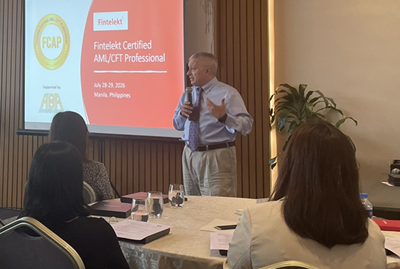
Shirish Pathak, Managing Director at Fintelekt, inaugurated the programme by welcoming the participants and introducing Fintelekt’s mission of fostering collaboration among industry stakeholders through continuous learning and knowledge sharing to combat financial crime. He explained that the training programme had been designed in response to jurisdiction-specific AML/CFT/PF challenges and aimed to provide participants with practical insights into evolving regulatory expectations and emerging risks. By bringing together experienced speakers, regulators, compliance professionals, and industry practitioners from diverse sectors, the programme sought to facilitate meaningful discussions, exchange of best practices, and peer learning to strengthen AML/CFT frameworks within organisations and across jurisdictions.
Mig Moreno, Deputy Secretary-Treasurer of the Asian Bankers Association (ABA), highlighted the importance of continuous capacity building in addressing the rapidly evolving financial crime landscape. He spoke about ABA’s commitment to promoting collaboration and knowledge exchange among banks and financial institutions across Asia, enabling members to collectively enhance their AML/CFT capabilities. He emphasised that strengthening regional cooperation, sharing practical experiences, and investing in professional development are essential to effectively combat money laundering, terrorist financing, and proliferation financing in an increasingly interconnected financial ecosystem.
AML/CFT Governance and Understanding of AML/CFT Risks
The opening session of Day One was delivered by Vikas Tandon, Trainer, Fintelekt, who provided a comprehensive overview of the AML/CFT/PF risk landscape in the Philippines and the wider Asia-Pacific region. He highlighted the importance of establishing a strong AML/CFT governance framework, emphasising the roles and responsibilities of boards, senior management and compliance functions in fostering a culture of compliance.
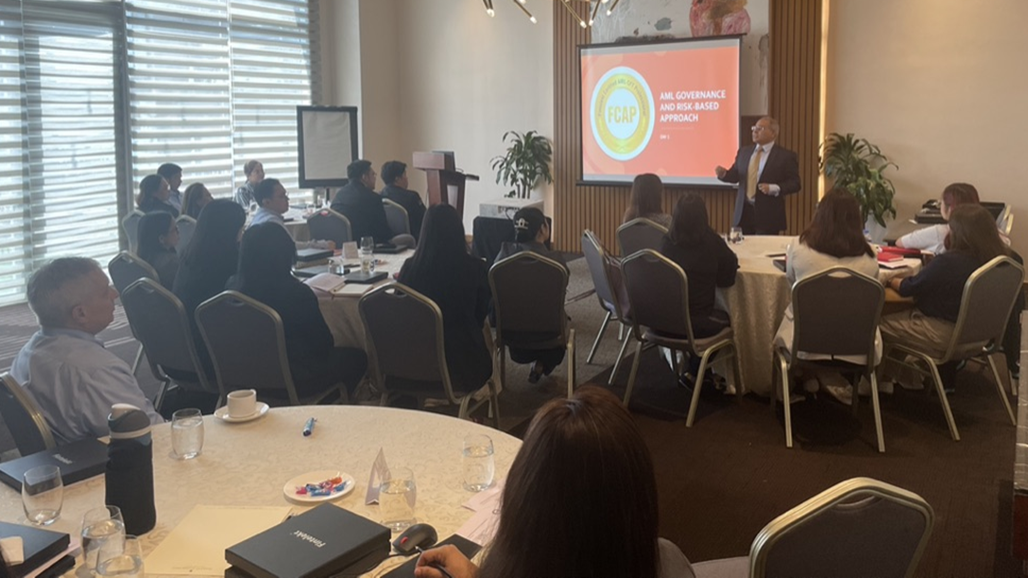
The session also highlighted the importance of establishing a strong governance framework that balances regulatory compliance with business objectives, while clarifying the roles and responsibilities of the Board, senior management, and compliance functions.
Vikas also explored key money laundering, terrorist financing, and proliferation financing risks, emphasising the importance of enterprise-wide risk assessments, identifying customer, product, channel, and geographic risks, and applying a risk-based approach to design effective controls and mitigation measures across different sectors.
Screening and Due Diligence
Vikas began by introducing the fundamentals of sanctions and due diligence, explaining the objectives of financial sanctions, the consequences of non-compliance, and the responsibilities of financial institutions in implementing effective screening controls.
This session explored the use of adverse media as a risk assessment tool to identify potential reputational and financial crime risks associated with customers. Vikas discussed the definition and identification of Politically Exposed Persons (PEPs), the importance of applying enhanced due diligence where appropriate, and practical considerations for conducting effective PEP screening. He concluded by examining the screening requirements for cross-border wire transfers, outlining key controls for different payment methods and emphasising the importance of robust screening processes in detecting sanctions risks and supporting compliance with AML/CFT obligations.
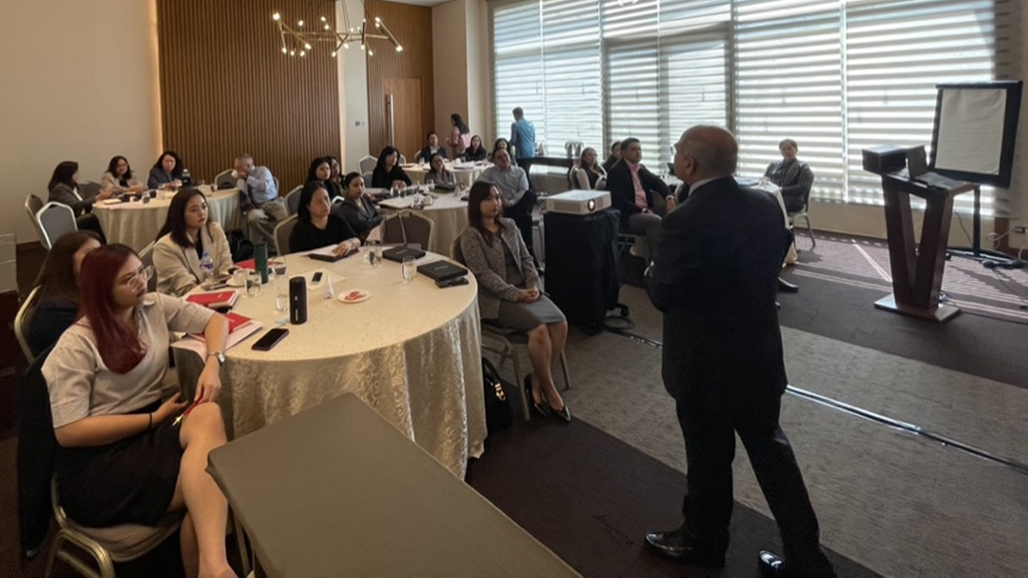
Group Activity – Evaluating the Onboarding of a Customer
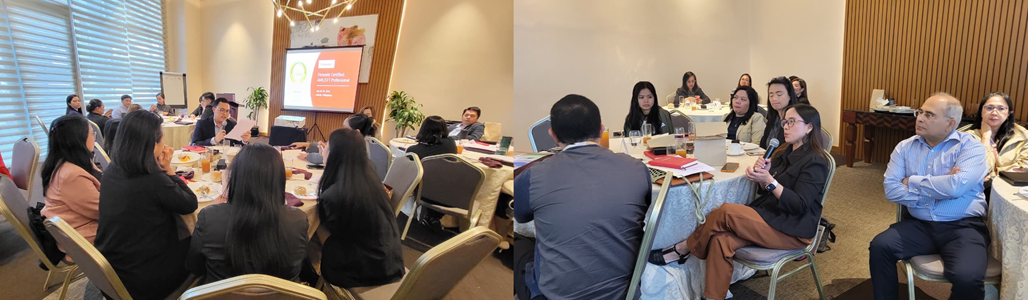
During the group activity, participants were divided into teams to present and elaborate on customer due diligence. Each group evaluated the onboarding of a high-profile customer based on a realistic case scenario, discussing the associated risks and determining an appropriate onboarding decision.
Combating Financial Flows Linked to OSAEC: Detection, Typologies and Institutional Response
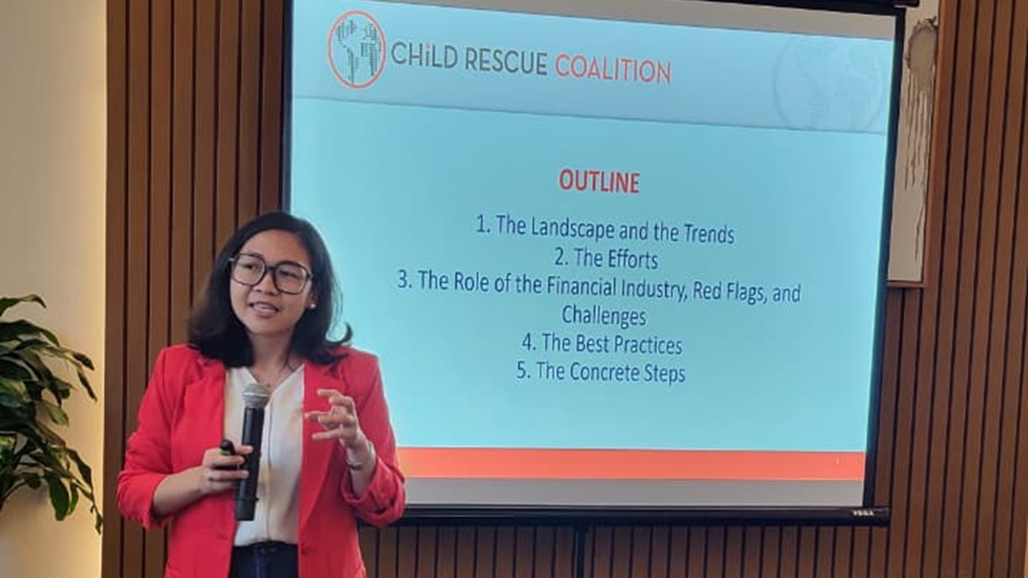
The third session of the day featured Jewel Dela Cruz, Philippine Tech Program Manager, Child Rescue Coalition, Inc., who delivered a comprehensive session on the growing threat of Online Sexual Abuse or Exploitation of Children (OSAEC) and the important role of the financial sector in detecting and disrupting these crimes. Jewel provided an overview of the evolving OSAEC landscape, including emerging typologies such as online grooming, sexual extortion, live-streamed abuse, AI-enabled exploitation and human trafficking, while explaining how these activities are often driven by commercial motives and facilitated through digital payment channels.
This session examined the financial flows associated with OSEAC, highlighting common payment patterns, cross-border remittance trends and transaction red flags, including low-value international transfers, multiple payments from unrelated individuals, payments to young beneficiaries, and high-volume P2P activity. Drawing on global case studies and best practices, Jewel emphasised the importance of strong KYC and customer due diligence, effective transaction monitoring, public-private partnerships, and close collaboration with law enforcement to enhance the detection, reporting and disruption of financial activity linked to child exploitation. She reinforced how covered persons can play a critical role in safeguarding vulnerable children by identifying suspicious financial behaviour and strengthening AML/CFT controls.
Terrorist Financing and Proliferation Financing Risks
The final session of Day One was delivered by Vikas Tandon, Trainer, Fintelekt, and focused on the risks associated with terrorist financing and proliferation financing. Vikas provided participants with a comprehensive overview of the evolving financing methods, emerging threats and practical detection measures, while highlighting the key challenges financial institutions face in identifying and mitigating these risks. The session also emphasised the importance of adopting a risk-based approach, strengthening customer due diligence, sanctions compliance and transaction monitoring to effectively prevent and detect terrorist and proliferation financing activities.
This session examined the sources and movement of terrorist funds, emerging financing methods involving digital technologies and virtual assets, and the distinctions between money laundering, terrorist financing and proliferation financing. Vikas reinforced the importance of adopting a risk-based approach and strengthening institutional controls to identify and prevent financing related to terrorism and weapons proliferation.
Day 2: Effective Transaction Monitoring and Reporting
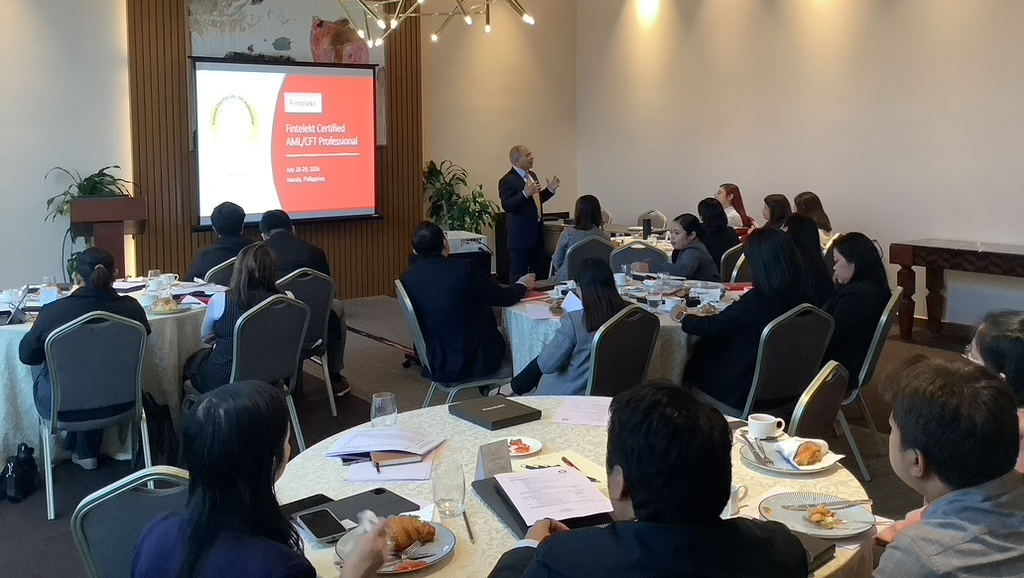
Vikas Tandon, opened Day two of the training programme with a session on Effective Transaction Monitoring and Reporting and Working Effectively with Regulators and Law Enforcement Agencies. He discussed common money laundering methods and emerging risks across correspondent banking, shell companies, virtual assets and new payment technologies, before highlighting key transaction monitoring red flags, alert generation, investigation workflows, and the importance of balancing false positives and false negatives to improve monitoring effectiveness.
He also provided practical guidance on conducting effective alert investigations, preparing high-quality SARs/STRs, maintaining confidentiality, and avoiding tipping off customers. The session concluded with an emphasis on continuous AML/CFT training, strong governance, collaboration across the three lines of defence, and proactive engagement with regulators and law enforcement to strengthen compliance and enhance financial crime risk management.
Combating Trade-Based Money Laundering
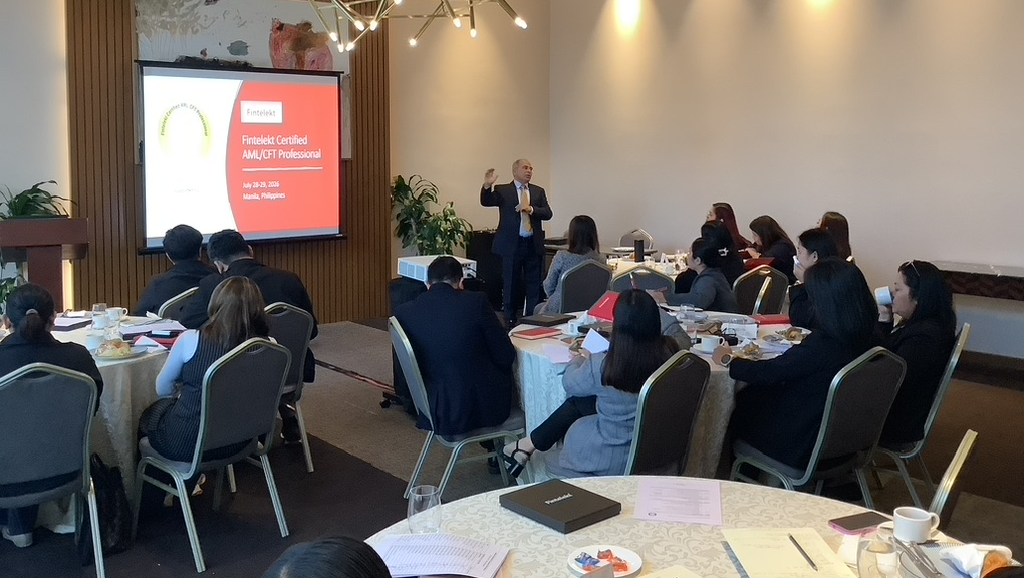
This session by Vikas explored common TBML methods, including trade mis-invoicing, over- and under-pricing, phantom shipments, multiple invoicing and the misuse of trade documentation to disguise the movement of illicit value. Participants also examined the challenges covered persons face in detecting TBML, such as limited visibility into underlying goods, reliance on trade documents and varying regulatory standards across jurisdictions.
The session highlighted a range of red flag indicators covering customers, counterparties, intermediaries, documentation, goods, transactions, shipments, sanctions and high-risk jurisdictions, while reinforcing the importance of effective trade due diligence, document verification and a risk-based approach to identifying suspicious trade transactions.
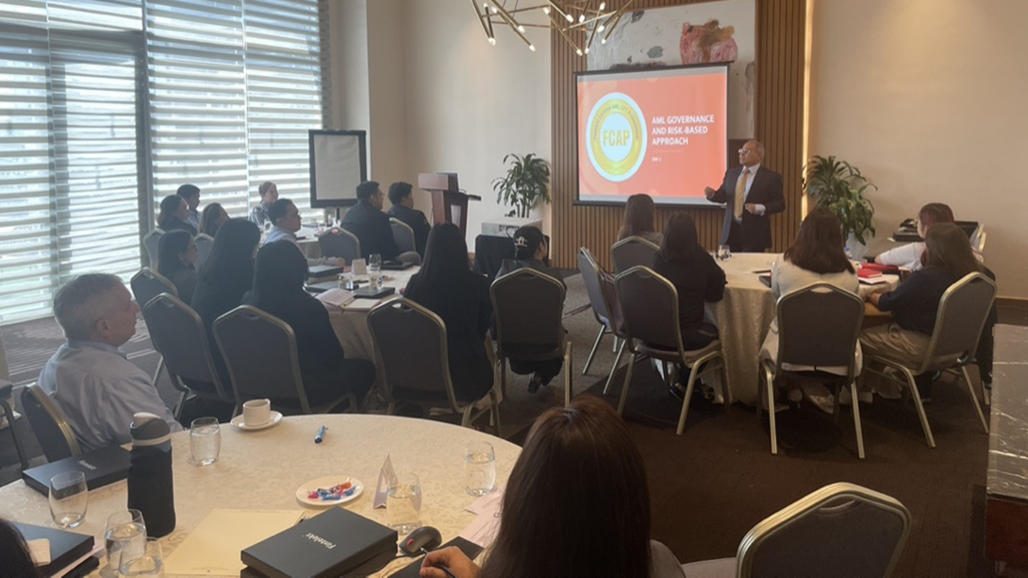
Group Exercise – Risk Assessment
A group exercise involved participants examining the money laundering and terrorist financing (ML/TF) risks faced by the sectors they represented, including banks, casinos and payment institutions, and relating these risks to the findings of the Philippines’ National Risk Assessment.
Participants identified the key risk areas relevant to their sectors and discussed the controls and mitigation measures typically used to manage these risks. The exercise encouraged participants to look beyond regulatory requirements and consider how sector-specific risks translate into practical AML/CFT controls, while also highlighting common challenges and areas where controls could be strengthened.
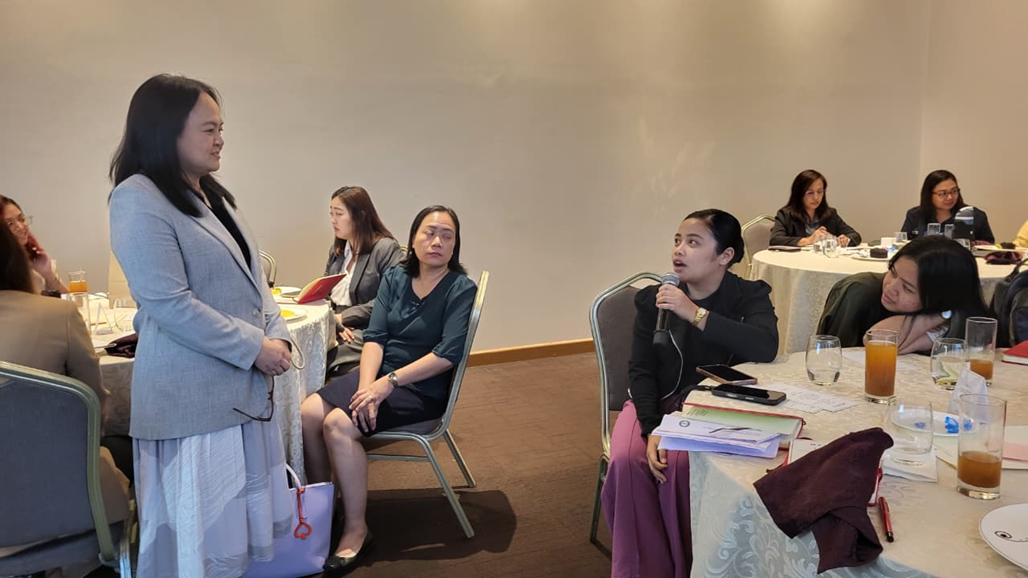
Understanding the Philippine AML/CFT Landscape: Risks and Regulatory Expectations
The second part of the two-day training programme was presented by Guada Vergel de Dios, Director, Chief Compliance Officer, Mizuho Bank and Trainer, Fintelekt. Guada provided participants with a comprehensive overview of the country's money laundering, terrorist financing and proliferation financing risks as identified in the Third National Risk Assessment (2021–2024).
Guada began with the national risk profile, key predicate offences, sectoral vulnerabilities and the growing risks associated with digital payments, virtual assets, fraud-enabled money laundering and cross-border transactions. Her session also highlighted the Philippines' regulatory priorities following its exit from the FATF grey list, emphasising the need for financial institutions to demonstrate AML/CFT effectiveness through robust institutional risk assessments, risk-based customer due diligence, meaningful transaction monitoring and high-quality suspicious transaction reporting.
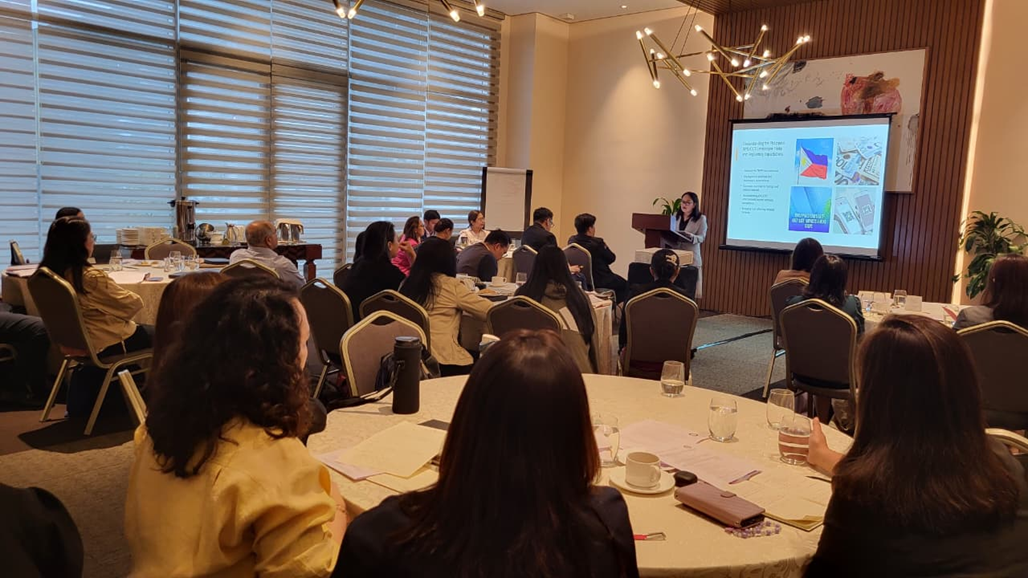
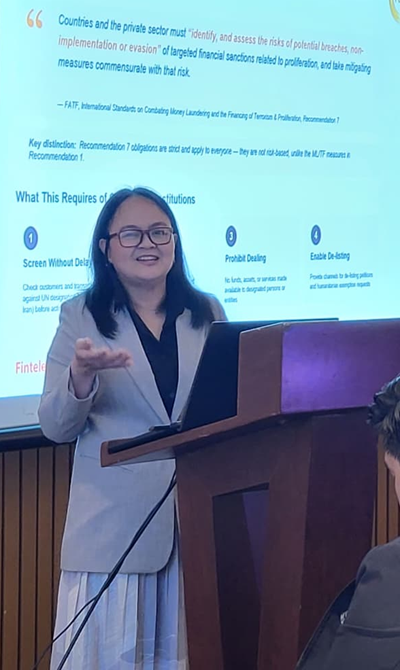
Guada further examined the evolving regulatory expectations surrounding beneficial ownership transparency and correspondent banking. She explained the latest SEC beneficial ownership disclosure framework, ongoing customer due diligence obligations and the importance of identifying and verifying ultimate beneficial owners, including those hidden behind complex ownership structures and nominee arrangements. The session also explored the risks associated with correspondent banking relationships, including shell banks, nested banking, sanctions evasion and cross-border payment vulnerabilities, while outlining the enhanced due diligence and governance measures expected under the Philippine AML/CFT framework.
Drawing on recent regulatory developments and practical case studies, including lessons from the Bangladesh Bank cyber heist, Guada reinforced the importance of strengthening institutional preparedness for future supervisory assessments. She concluded the session with practical guidance on aligning institutional risk assessments with national risks, enhancing transaction monitoring and screening controls, improving the quality of suspicious transaction reporting, embedding proliferation financing risk into AML/CFT frameworks, and maintaining strong governance practices.
Key Outcomes of the Programme
The training programme equipped participants with a comprehensive understanding of key AML/CFT concepts, international standards, and the national regulatory framework under the amended AMLA. Participants gained practical insights into implementing a risk-based approach through effective AML governance, National and Institutional Risk Assessments, customer due diligence, enhanced due diligence, sanctions screening, and the identification of Ultimate Beneficial Owners (UBOs) and Politically Exposed Persons (PEPs).
The sessions also explored emerging and evolving financial crime risks, including trade-based money laundering, terrorist financing, proliferation financing, OSAEC-linked financial flows, virtual assets, and new payment systems. In addition, participants enhanced their understanding of transaction monitoring, high-quality Suspicious Transaction Report (STR) filing, regulatory and law enforcement engagement, and the importance of coordination, preventive measures, and robust internal controls in strengthening institutional AML/CFT frameworks.