
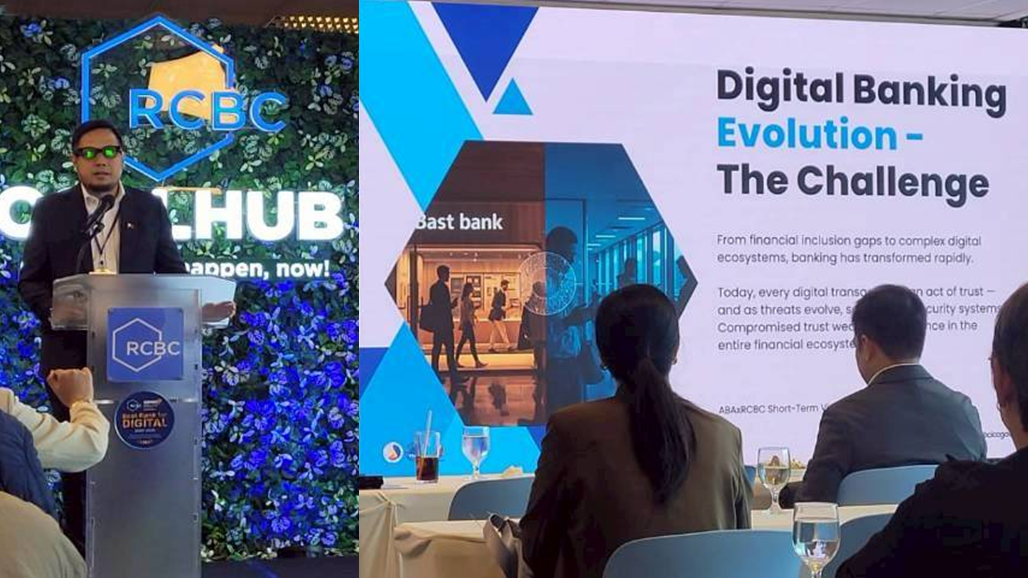
The Asian Bankers Association (ABA) and the Rizal Commercial Banking Corporation (RCBC) jointly organized a Short-Term Visiting Program (STVP) focusing on the theme “Shaping the Future of Banking Through Sustainability, Open Finance, AI, Cybersecurity and Digital Innovation” held on June 24-25, 2026 at the RCBC AT Yuchengco Centre, BGC, Philippines.
The primary objective of ABA’s short-term visiting program is to provide its member banks, particularly those from less developed countries, the opportunity to study and undergo training on specific aspects of the operations and facilities of the host banks and learn from their experience and best practices. The idea is to enable the participants to: (a) enhance and upgrade their technical skills and knowledge in specific business areas, in the distinct and peculiar social, economic, and business environment of the host country, and (b) gain first-hand knowledge of the operations, systems and work procedures of the host bank's various line departments.
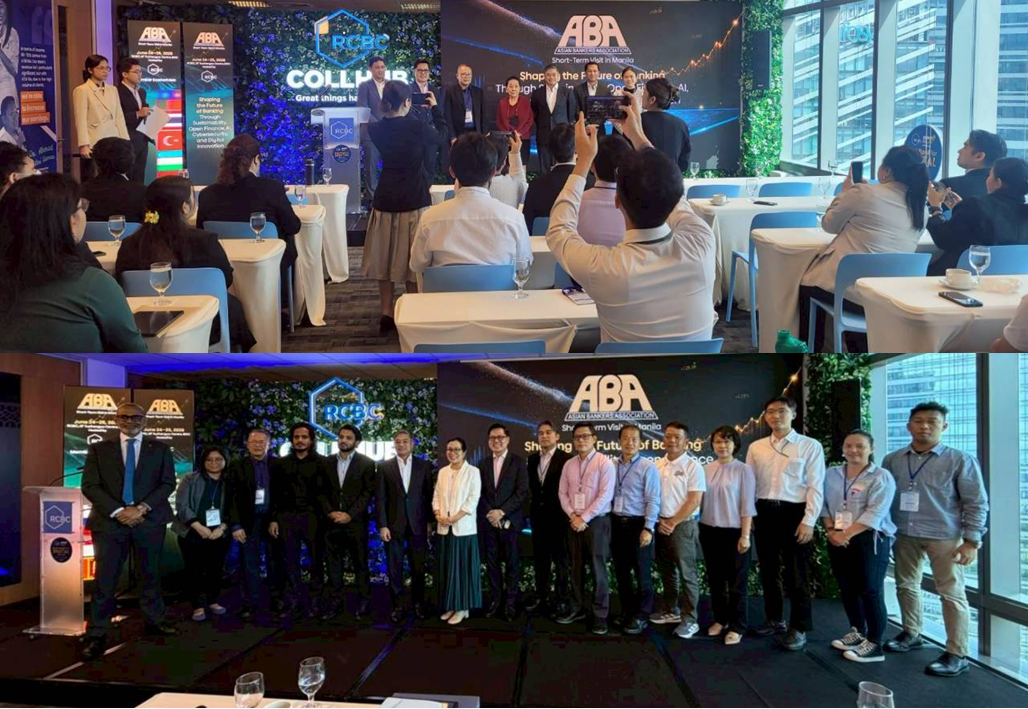
The number of registered participants from ABA member banks totaled 16 who came from Maldives, Taiwan and the Philippines (See Annex 1 for complete list). In addition, some 30 executives from RCBC and its local network were also present. RCBC Chairperson Mrs. Helen Y. Dee attended the second-day sessions of the Program.
Welcome Remarks
Mr. Reggie Cariaso, President and CEO of RCBC, delivered the Opening Remarks on behalf of the host organization. In his Remarks, Mr. Cariaso highlighted the following points:
- When we look at the financial landscape across Asia today, we see an industry undergoing a long overdue metamorphosis. We are moving past traditional brick-and-mortar operations and isolated apps towards a highly integrated, intelligent, and borderless ecosystem. The theme for this event – Shaping the Future of Banking Through Sustainability, Open Finance, AI, Cybersecurity, and Digital Innovation – captures the exact forces redefining our futures as both consumers and professionals in the banking industry.
- Over the next two days, the eight modules of the Program will focus on two critical themes that define this new global banking architecture: next-generation banking platforms and contextualizing these innovations through trust and purpose.
- First, discussion will address these new platforms – the very rails that will drive tomorrow’s economy. We will examine how we are rewiring the digital payments ecosystem to modernize banking experiences to shield consumers from friction and fraud through the lens of stablecoins, programmable finance, and payments tokenization.
- Because true digital transformation does not stop at our national borders, we will look at BSP’s Project Nexus to see how interoperable cross-border networks are enabling faster, more inclusive transactions across the ASEAN region and beyond. Finally, we will see these frameworks come alive through Agentic AI, moving from beyond simple automation and clunky chatbots to fundamentally redefine merchant and consumer experience. This is the infrastructure of tomorrow: programmable, tokenized, interconnected, and intelligent.
- But technology without context is hollow; tools are only as good as the human outcomes they secure, which brings us to the second theme: trust and purpose. We see this purpose clearly defined when we look at Open Finance, for example, not just as an API technology but as a vehicle for national wealth creation through the PERA Initiative, scaling up retirement readiness and financial dignity for millions.
- Yet, we cannot build wealth without safety. Through Cybersecurity by Design and the NASH Initiative, we reinforce the digital trust backbone that serves as our ecosystem’s bedrock. Trust is, always has been, and always will be our ultimate currency. And we cultivate trust by innovating with true empathy – designing financial systems that actively drive the financial health and long-term resilience of the everyday customers.
- Ultimately, this purpose is a reflection of how we view our planet and the people around us and how we will be valued by them. Sustainability in banking cannot be a mere box-checking exercise for ESG compliance. It must be championed as a core catalyst for value creation, institutional resilience, and long-term competitive advantage.
- The next two days are an opportunity to align our capabilities with our responsibilities. Next-generation banking gives us the power to change financial services, but anchoring our innovations in trust and purpose gives us the direction.
ABA Deputy Secretary-Treasurer Mr. Amador Honrado Jr. gave an Opening Statement on behalf of the ABA. In his Statement, Mr. Honrado joined Mr. Cariaso and RCBC in heartily welcoming all of the participants to RCBC’s Short-Term Visiting Program which he said the ABA was pleased to co-organize with RCBC.
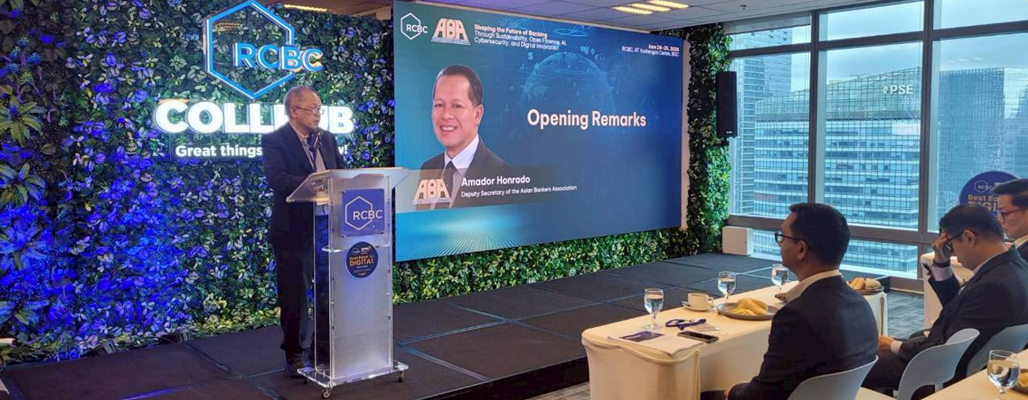
He proceeded to inform the participants that one of the most important activities of the ABA is its professional development program which includes training courses on banking and finance conducted with member banks as well as with leading training institutes in the region. He pointed out that many areas within banking markets are experiencing some serious existential threats, noting that as the industry is being transformed – particularly by emerging technologies and sustainability concerns - there is uncertainty around what the future of the banking industry will look like over the next decade. He said that the banking industry is expected to look a lot different in ten years time, with many traditional players now faced with the choice of either being disintermediated or proactively disrupting their own business models to thrive in the future.
Hence, to equip members with the tools and skills to adequately meet the challenges they are confronted with, the ABA has placed emphasis on organizing training courses for its members, Mr. Honrado remarked. One such training course, he said, is the Short-Term Visiting Program, the primary objective of which is to provide ABA member banks, particularly those from less developed countries, the opportunity to study and undergo training on specific aspects of the operations and facilities of the host banks, and learn from their experience and best practices. The aim is to provide the Program host organization and participants the opportunity share their experiences and perspectives on how industry layers can address the challenges – and take full advantage of the opportunities – presented by these developments.
Mr. Honrado expressed his hopes that the RCBC program – which featured topnotch experts from both government and the private sectors - would not only serve as a valuable learning experience for those present, but also help open up opportunities for new businesses and business relations, as well as long-term friendships among them.
Summary of Speaker Presentations
During the two-day program, invited experts shared their respective organizations’ experiences and best practices in the areas of:
(a) stablecoins;
(b) open finance platform banking;
(c) cybersecurity;
(d) payments tokenization;
(e) financial innovation;
(f) agentic AI;
(g) ESG compliance in banking; and
(h) harnessing cultural values into digital readiness.
The invited experts and their respective topics included the following:
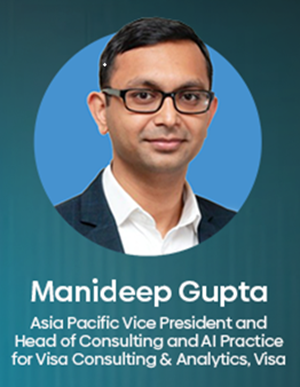 Module 1: Unlocking Stablecoin Use Cases
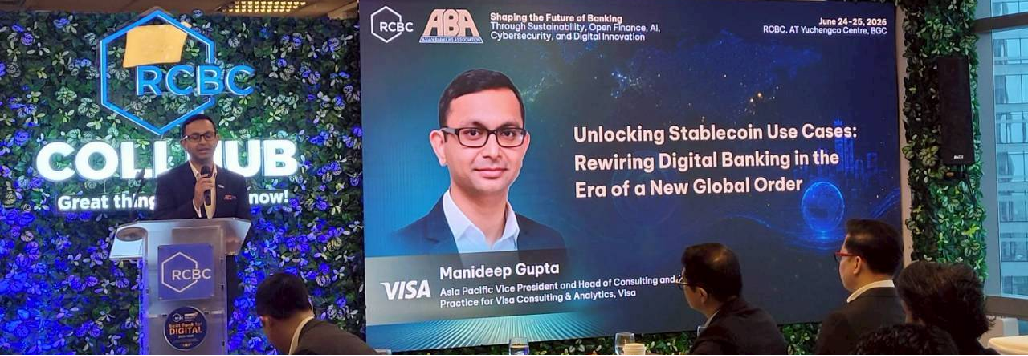
Speaker: Manideep Gupta, Head of Consulting & AI Practice, VISA Asia Pacific
Mr. Gupta spoke on the evolving role of stablecoins in enabling programmable finance, modernizing payments, and re-shaping the future of global digital banking ecosystems.
He pointed out that as the global financial system recalibrates, with geopolitical fragmentation, currency shifts, and changing trade routes, stablecoins are starting to look less like a niche asset and more like a new layer of programmable money. They sit between traditional finance and decentralized infrastructure, with real potential to reshape how money moves.
Mr. Gupta emphasized the need to focus on moving past the hype. The real question, he said, is how stablecoins deliver practical value across digital banking, cross-border payments, liquidity management, and financial inclusion. It also reframes the narrative, explaining that stablecoins don’t have to compete with banks. With the right governance and integration, they can become a strategic tool within regulated financial ecosystems.
Mr. Gupta pointed out a number of areas to explore, including: (a) Positioning stablecoins as settlement rails for real-world transactions, not just crypto activity; (b) Improving cross-border payments with faster, cheaper, and more transparent flows; (c) Integrating stablecoins into digital banking, treasury functions, and liquidity management; (d) Enabling programmable finance, from automated payments to conditional disbursements and trade flows; (e) Expanding financial access, especially in markets facing currency volatility or limited dollar access; (f) Aligning regulation across central banks and industry, covering reserves, risk management, and consumer protection; and (g) Navigating the balance between CBDCs, stablecoins, and fiat in a more fragmented global financial system
 Module 2: Open Finance Platform Banking
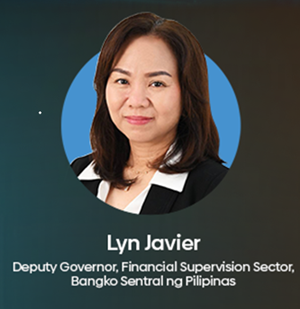
Speaker: Lyn Javier, Deputy Governor, Financial Supervision Sector, Bangko Sentral ng Pilipinas
Deputy Governor Javier explored how Open Finance and embedded banking can drive inclusive wealth creation through scalable digital ecosystems.
She spoke about the Personal Equity and Retirement Account (PERA), which is a voluntary, tax-advantaged retirement savings program in the Philippines. She pointed out that while PERA has long been positioned as a tax-advantaged retirement vehicle, yet its transformative potential remains significantly underutilized. She noted thatiIn the era of Open Finance, embedded banking, and digital ecosystems, PERA can evolve far beyond a standalone investment product into a fully integrated, digital-first wealth infrastructure.
Ms. Javier reframed PERA not merely as a compliance-driven savings instrument, but as a scalable, API-enabled platform capable of democratizing long-term investing and retirement readiness for every Filipino. She explained that ut explores how banks, fintechs, regulators, employers, and ecosystem players can converge to transform PERA into a frictionless, interoperable, and intelligent financial layer seamlessly embedded into everyday digital banking journeys.
At its core, the discussion highlights how technology, behavioral finance, and ecosystem collaboration can unlock PERA’s next phase of growth making wealth accumulation more accessible, personalized, and inclusive at scale.

 Module 3: Cybersecurity by Design
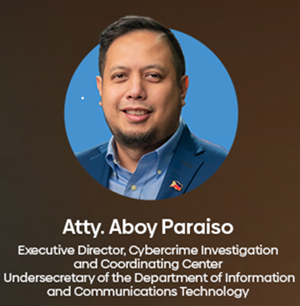
Speaker: Atty. Aboy Paraiso, Executive Director, Cybercrime Investigation and Coordinating Center and Undersecretary of the Department of Information and Communications Technology
Atty. Paraiso shared his perspectives on strengthening digital trust through cyber resilience and coordinated ecosystem defense.
Atty. Paraiso pointed out that his organization, the Cybercrime Investigation and Coordinating Center, is driving a shift from reactive enforcement to proactive defense through the NASH (National Anti-Scam Hub) initiative. In a landscape where digital fraud evolves faster than regulation, cybersecurity has to be built in from the start, not bolted on later, he stressed.
This frames NASH as more than a coordination hub. It becomes a real-time, intelligence-driven backbone for preventing, detecting, and responding to fraud. It also makes cybersecurity a shared responsibility across government, banks, fintechs, and telcos, grounded in data sharing, interoperability, and fast, coordinated action.
Atty Paraiso also shared his perspectives on: (a) Embedding cybersecurity at the architecture level across financial ecosystems, moving from reactive to predictive; (b) Positioning NASH as core infrastructure, enabling real-time threat intelligence, account freezing, and coordinated response; (c) Scaling interoperability by linking banks, e-wallets, telcos, and law enforcement through secure APIs; (d) Strengthening trust as a competitive advantage, with visible and system-wide protection for consumers; (e) Balancing fast data sharing with strong governance and privacy safeguards under Philippine law; and (f) Deepening industry collaboration through institutionalized public-private partnerships against cybercrime
 Module 4: Scaling Payments Tokenization
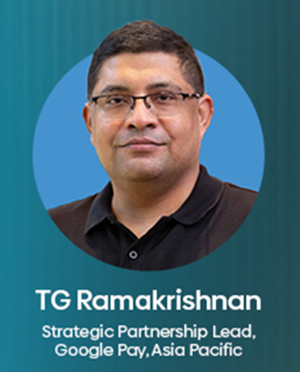
Speaker: TG Ramakrishnan, Strategic Partnership Lead, Google Pay, Asia Pacific
Mr. Ramakrishnan’s presentation focused on how tokenization is securing payment infrastructure and enabling seamless digital commerce.
He observed that as digital payments surge, tokenization is becoming a core layer, not just for security, but for scale. By replacing sensitive card and account data with dynamic tokens, financial institutions can cut fraud risk and enable seamless, interoperable payment experiences across channels.
Mr. Ramakrishnan looked at how scaling tokenization across the ecosystem, from cards and wallets to account-to-account (A2A) and QR payments, can unlock the next phase of digital commerce growth, and how it also reframes tokenization from a backend security feature into a strategic driver of trust, innovation, and economic velocity.
He also stressed the need to explore the following: (a) Turning tokenization into core payments infrastructure, not just a protection layer; (b) Reducing fraud at scale by limiting breaches, account takeovers, and merchant exposure; (c) Enabling interoperability across banks, fintechs, merchants, and super apps; (d) Extending tokenization beyond cards to A2A, QR Ph, and emerging payment rails; (e) Creating frictionless experiences like one-click checkout, subscriptions, and invisible payments; (f) Driving economic impact through higher merchant confidence, increased volumes, and faster digital adoption; (g) Aligning with regulation by embedding tokenization into national payment frameworks and cybersecurity mandates
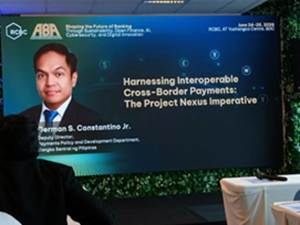 Module 5: Harnessing Interoperable Cross-Border Payments
Speaker: German S. Constantino Jr., Deputy Director, Payments Policy and Development Department, Bangko Sentral ng Pilipinas
Mr. Constantino took a strategic look at how interoperable payment networks can unlock faster, more inclusive, and cost-efficient cross-border transactions across ASEAN and beyond.
He elaborated on Project Nexus led by the Bank for International Settlements, which he said is reshaping how countries connect their instant payment systems. It moves away from fragmented corridors and toward a unified, interoperable network of networks.
In a region like ASEAN, where remittances, trade, and digital commerce are tightly linked, Nexus marks a real step change, Mr. Constantino said, adding that it enables real-time, low-cost, and secure cross-border payments without relying on traditional correspondent banking layers. He stressed that this positions Nexus as more than infrastructure. It becomes a strategic lever for regional integration, financial inclusion, and digital competitiveness.
Mr. Constantino identified the importance of exploring the following: (a) Linking national real-time payment systems into a multilateral grid, shifting from corridors to true connectivity; (b) Improving cost, speed, and transparency across remittances, MSME trade, and platform-driven economies; (c) Treating interoperability as a strategy, aligning standards, governance, and settlement frameworks across jurisdictions; (d) Unlocking ASEAN’s potential by accelerating intra-regional flows and reducing reliance on legacy rails; (e) Expanding financial inclusion by giving migrants, gig workers, and SMEs seamless cross-border access; (f) Strengthening public-private coordination across central banks, payment operators, banks, and fintechs; and (g) Addressing readiness and risks, including FX, liquidity, compliance, and cybersecurity in a Nexus-enabled environment.
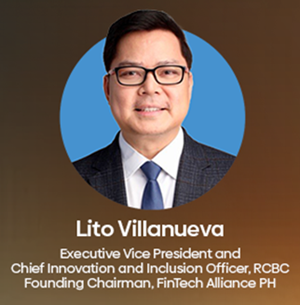 Module 6: Sustaining Innovation with Empathy
Speaker: Lito Villanueva, Executive Vice President and Chief Innovation and Inclusion Officer, RCBC and Founding Chairman, FinTech Alliance PH
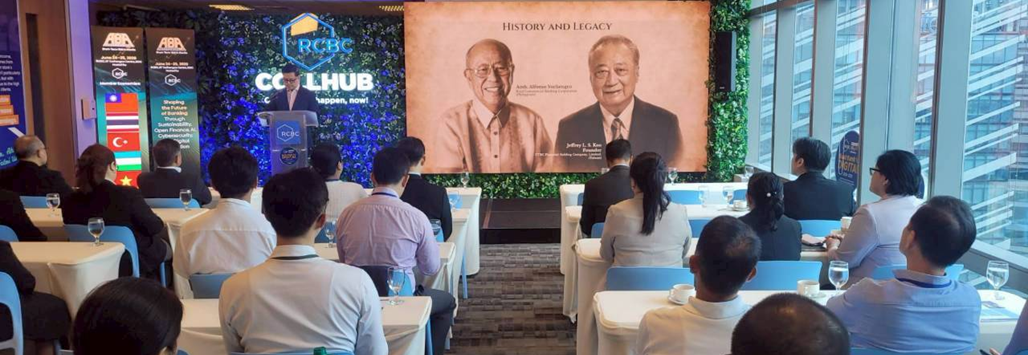
Mr. Villanueva opened his presentation with a brief introduction on the ABA and its activities. He likewise cited the important roles played by Amb. Alfonso T. Yuchengco, the Founder of RCBC, and of Amb. Jeffrey S. Koo, the Founder of CTBC Bank, in the establishment of the Association in 1981 and its growth thereafter to become the largest grouping of bankers in the region.
In his presentation, Mr. Villanueva elaborated on embedding empathy into financial innovation to create solutions that improve financial resilience, trust, and meaningful customer outcomes.
He noted that in the race to digitize and scale, it is easy to lose sight of what really matters—improving financial health. Innovation without empathy often leads to adoption without impact. People use the product, but it does not necessarily help them move forward financially.
He emphasized that the next chapter of financial innovation must be built on three pillars: Trust, Resilience, and Meaning. Trust enables people to confidently participate in the financial system, resilience equips them to better withstand life's uncertainties, while meaning ensures that innovation creates lasting value by improving people's everyday lives.
This shifts the lens, he said, adding that empathy is not a soft skill but a strategic capability. When banks and fintechs truly understand how people earn, spend, save, and struggle, they can design solutions that do not just enable transactions, but change outcomes. Success, he stressed, should not be measured by downloads or transaction volumes alone, but by stronger financial health, better savings behavior, lower financial stress, and greater resilience over time.
Looking beyond individual markets, Mr. Villanueva also underscored the importance of strengthening regional collaboration as ASEAN advances its digital economy agenda. He noted that technology and regional integration should ultimately expand opportunities for people and businesses across the region, particularly those who remain underserved by traditional financial systems.
Mr. Villanueva concluded by reminding participants that fintech is a humanity story. While technology continues to reshape financial services, he emphasized that the true measure of innovation is not the sophistication of the technology deployed, but the number of lives improved through more inclusive, resilient, and meaningful financial solutions.
Mr. Villanueva pointed out a number of areas to explore, including: (a) Redefining KPIs around financial health, not just usage or activity; (b) Using behavioral design, nudges, defaults, and incentives to build better money habits; (c) Designing for underserved and vulnerable segments with real-world constraints; (d) Building trust through simpler products, clearer pricing, and fewer hidden risks; (e) Using data and AI to personalize guidance, not just push more products; (f) Connecting banking to livelihoods, government services, and everyday life; and (g) Embedding empathy into product design, policy decisions, and platform strategy.
 Module 7: Embracing Agentic AI
Speaker: Jason Crasto, Country Manager, Mastercard Philippines
Mr. Crasto conducted an insightful session on how autonomous AI systems and Agentic AI are redefining payment experiences for consumers and merchants across a rapidly evolving digital economy.
He ventured that the next frontier of AI in banking isn’t just predictive, it’s agentic, noting that we are moving beyond analytics and copilots to systems that can plan, decide, and execute across workflows. That shift changes how banks operate, serve customers, and scale, he pointed out.
This opens the door to a new model. Instead of human-led processes with AI support, banks move toward AI-led orchestration with human oversight. AI becomes part of the operating layer, embedded across customer engagement, risk, operations, and ecosystem partnerships. Furthermore, it also reframes the role of AI. It’s not just a productivity tool, it’s a driver of how work gets done and how value is created.
Mr. Castro identified several areas to explore, including: (a) Moving from copilots to agents, enabling AI systems that can act, not just assist; (b) Automating end-to-end workflows across onboarding, servicing, compliance, and back-office operations; (c) Delivering hyper-personalized, real-time financial guidance through AI agents; (d) Building strong guardrails with governance, auditability, and human-in-the-loop controls; (e) Reducing cost-to-serve while improving customer experience; (f) Orchestrating ecosystems, with agents interacting across APIs, platforms, and third-party services; and (g) Rethinking talent, roles, and decision-making in an AI-native bank
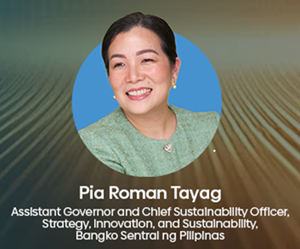 Module 8: Sustainability in Banking
Speaker: Pia Roman Tayag, Assistant Governor and Chief Sustainability Officer, Strategy, Innovation, and Sustainability Office, Bangko Sentral ng Pilipinas
Assistant Governor Tayag led a strategic discussion on how banks can transform sustainability from a compliance requirement into a catalyst for growth, resilience, innovation, and long-term competitive advantage.
She stressed that sustainability in banking isn’t just about compliance or ESG reports anymore. It is about how banks create long-term value. She explained that as climate risk, inequality, and rising governance expectations reshape markets, banks need to move from passive financiers to active enablers of sustainable growth.
Ms. Tayag underscored how sustainability becomes part of the core strategy, which means scaling green finance, building inclusive digital ecosystems, integrating climate risk into decision-making, and pushing responsible innovation. It also raises a tougher question, she added, namely: Can sustainability drive new revenue, deepen customer trust, and strengthen the balance sheet over time?
She identified the following areas as worth exploring: (a) Shifting ESG from a reporting requirement into a real revenue driver; (b) Financing the transition through green, blue, and transition finance, especially in emerging markets; (c) Embedding climate risk into credit, capital allocation, and portfolio strategy; (d) Using digital banking to expand inclusion and support sustainable outcomes; and (f) Leveraging AI and data to measure impact and scale it effectively.
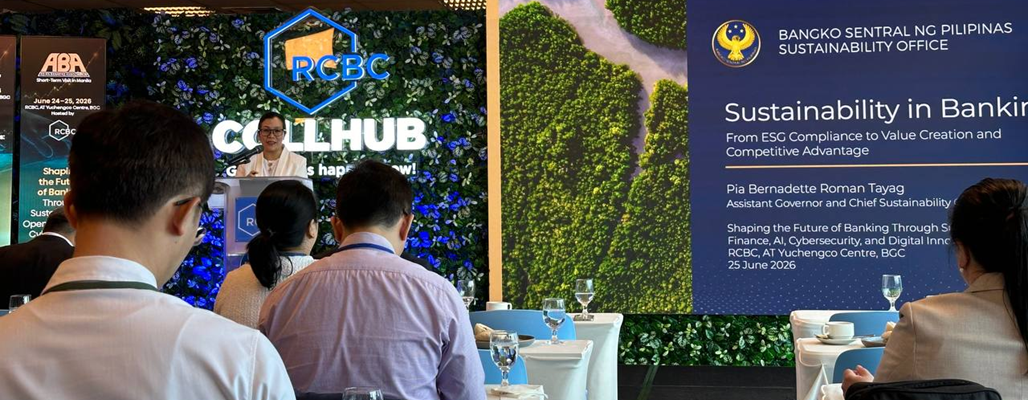
During the Q&A session following Ms. Tayag’s presentation, Mr. Honrado mentioned that the Confederation of Asia-Pacific Chambers of Commerce and Industry (CACCI), which is the parent organization of the ABA – had earlier conducted a study aimed at getting a better understanding of the needs and challenges faced by SMEs in transitioning their businesses or organizations toward net-zero goals. He pointed out that the study, which was conducted through interviews, also sought to gather insights and suggestions on how chambers of commerce and financial institutions can provide effective support in this transition.
He also mentioned that CACCI in November 2024 jointly launched with the Singapore Manufacturing Federation the Asia-Pacific Green Alliance Initiative (APGA) which aims to equip SMEs with the skills, knowledge, and support to take on the climate change challenge. He added that by leveraging the collective voice of SMEs, the APGA hopes to advocate for regulations that not only benefit the environment but also create a conducive ecosystem for SMEs to thrive sustainably. Mr. Honrado offered to share a copy of the report on the survey results to Ms. Tayag for her perusal.
In response, Ms. Tayag informed the participants that the OECD, in collaboration with the central bank of the Philippines, Bangko Sentral ng Pilipinas (BSP), is working to identify practical solutions to scale up MSME clean energy 1investment. The OECD, under its Clean Energy Finance and Investment Mobilisation (CEFIM) Programme, launched a survey on “Strengthening access to clean energy financing for MSMEs in the Philippines” in October 2025 to map both demand side (MSME perspectives and needs) and supply side (financial institutions and product offerings) challenges and opportunities, while also assessing the role of associations, development partners and intermediaries.
Ms. Tayag likewise offered to share a copy of the initial results of the OECD survey which she said might be useful for the CACCI study.
 Module 9: Harnessing Cultural Values Into Digital Readiness
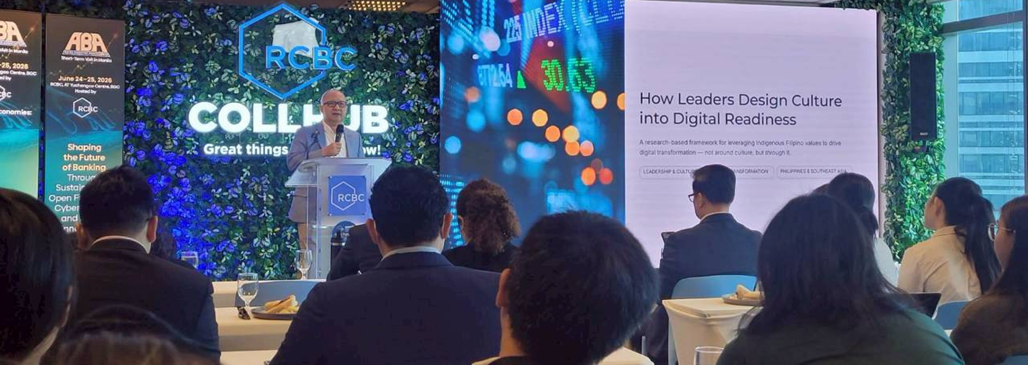
Speaker: Eugene S. Acevedo, Director, Former President and CEO, RCBC and currently member of the ABA Advisory Council
Mr. Acevedo conducted a forward-looking conversation on how culture, leadership, and human behavior can accelerate digital transformation and future-ready banking organizations.
Closing Remarks
RCBC President and CEO Mr. Cariaso in his Closing Remarks, said that when the Program opened during the first day, he noted that banking sector is witnessing a long-overdue metamorphosis in Asian banking, and that the discussions thereafter have confirmed “the ground is shifting underneath our feet.”
He proceeded to point out that “Our sessions on next-generation platforms proved that the technological horizon is rushing toward us at breakneck speed. We listened to brilliant frameworks on tokenized economies, boundaryless cross-border rails, and the inevitable rise of AI. It is clear that the technical capability to build a faster and smoother financial world is entirely within our grasp.
“But what resonated with me most profoundly—and what I believe will be the true legacy of this seminar—was our collective refusal to let technology outpace our humanity. Time and again, our speakers and delegates brought the conversation back to a deeper truth: an algorithm cannot build a society, and an isolated digital rail cannot secure human dignity. Whether we were debating the real-world impact of open finance on retirement, the absolute necessity of institutional trust in cybersecurity, or the pivot of sustainability from a compliance burden into a core strategy, the message was clear. We are not just mechanics optimizing machines. We are stewards of the public trust.
“Let us take the spirit of collaboration from this room and inject it into our boardrooms. Let us create platforms that are brilliant, but let us do so as forces for nation-building.”
In conclusion, Mr. Cariaso expressed his sincere thanks to the Asian Bankers Association for bringing the Program participants together, to the exceptional speakers for challenging the participants’ perspectives, and to all the Program attendees for their insight and leadership. He also wished the international guests a safe and pleasant journey home.
For his part, ABA Deputy Secretary Mr. Honrado thanked all the speakers for generously sharing their valuable time and expertise on the various topics presented in this year’s Short-Term Visiting Program hosted by RCBC.
He conveyed his appreciation to the officers and staff of RCBC for their support of this important training activity of the ABA, and for the preparations and all the work put in to make this year’s program substantially meaningful and productive.
Mr. Honrado also conveyed ABA’s sincerest gratitude to all the program participants for their presence and their stimulating discussions and enlightening commentaries on the topics presented. He expressed his hopes that they have learned much from the two-day program and that it has opened up new horizons and new opportunities for them, thanking them for helping ABA and RCBC meet the objectives of the program. He also shared his wish that their participation had given them the opportunity not only to learn and benefit from the presentations, but also to establish strong relationships with their colleagues from RCBC and other participating countries, thereby making their participation worthwhile.
Lastly, Mr. Honrado took the opportunity to invite the delegates to the 42nd ABA General Meeting and Conference to be hosted by Bank of Maldives on September 1-3 at Kurumba Resort in the Maldives. He highlighted the following about the Maldives Conference:
(a) The theme of this Year’s annual Conference in Maldives will focus on “Banking in Asia: Investing to Build Resilience”. It will cover essentially the same topics discussed during the past two days; however, it will have an added dimension as it will provide a regional and other country perspectives of invited speakers from other ABA member countries, who are expected to share their thoughts and ideas on the following topics:
- Banking in the Digital Era
- Sustainable Banking
- Leveraging Technology to Manage Risks
Honrado added that there would also be a Governors’ Roundtable that would gather together representatives from regulatory agencies in different countries who will share their valuable perspectives on the need to create a policy environment that will support the efforts of banks to effectively adapt to the emerging trends and developments in the banking industry.
Distribution of Certificates of Attendance
Certificates of Attendance were later distributed to the participants by Ms. Abby Moreno, Senior Officer of the ABA.
Course Evaluation by Participants
To help improve the program for future offering, the participants were requested to complete a Course Evaluation Form designed to seek their comments on the following items:
(a) Course Design Materials
(b) The Program Speakers
(c) Program Management
(d) Over-all Program Rating