
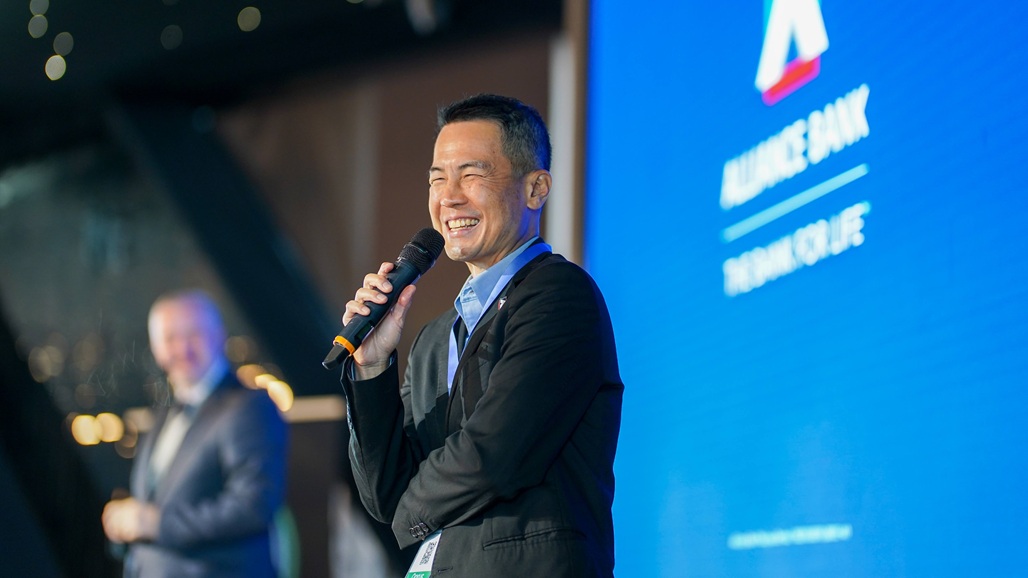
The Qorus Reinvent Forum Kuala Lumpur 2026, organized in association with the Asian Bankers Association, was a resounding success. Held in Kuala Lumpur on 28–29 April 2026, the two-day event gathered policymakers, business leaders, and AI developers from the UK, Serbia, France, Taiwan, Indonesia, Singapore, Malaysia, Cambodia, Laos, Thailand, India, Bangladesh, Sri Lanka, and other countries.
Under an atmosphere of camaraderie and serious dialogue, speakers and participants developed an AI-centered perspective on banking, assessing the current state and discussing future developments. Coffee breaks and meals at the Element Hotel KL further enhanced exchanges, allowing conversations to continue informally and deepen engagement among participants. The overall setting fostered both networking and substantive discussions. Here is the summary of the presentations
28 April 2026
Official Welcome started with Zubaiar Ahmed, MD Middle East & APAC at Qorus, and Jan Uriga, Sr. Advisor at Qorus
The event opened with welcoming remarks that set a collaborative tone for the forum. The speakers emphasized the importance of cross-border cooperation in addressing technological disruption in banking. They also highlighted the growing role of AI as a unifying theme across institutions. The welcome underscored the need for both innovation and coordination among stakeholders.
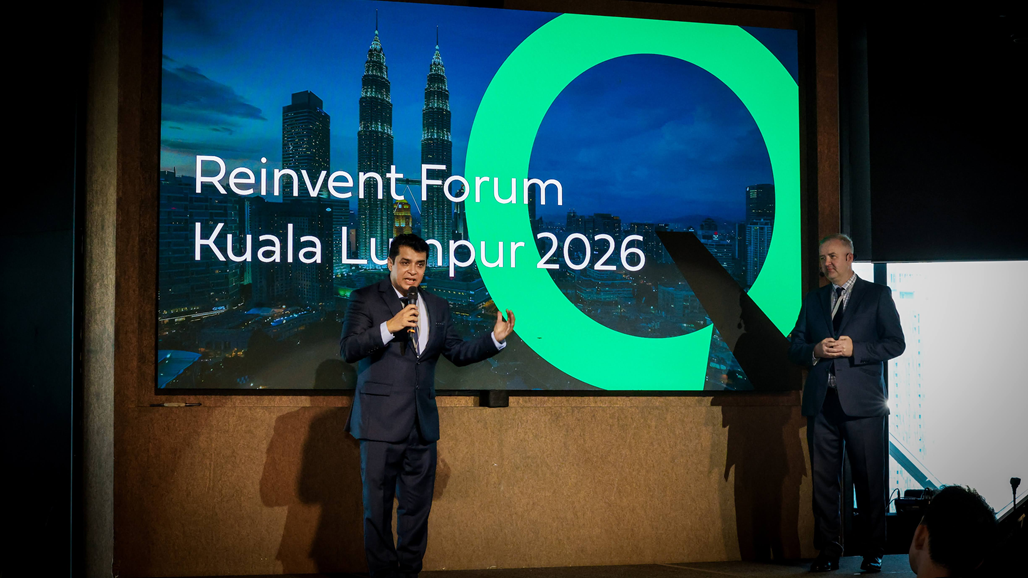
0915 KEYNOTE INTERVIEW: Understanding how current frameworks are evolving to accommodate more autonomous and decision-making AI systems with Zubaiar Ahmed, MD Middle East & APAC at Qorus (Moderator), and Sam Majid, Head of the National AI Office at the National AI Office Malaysia
The opening session addressed AI regulation from the perspective of central banks. A key issue identified was poor data quality, which leads to unreliable models and weak outcomes. In Malaysia, while universities are producing technical graduates, the real challenge lies in implementation and ensuring AI is effectively deployed across sectors.
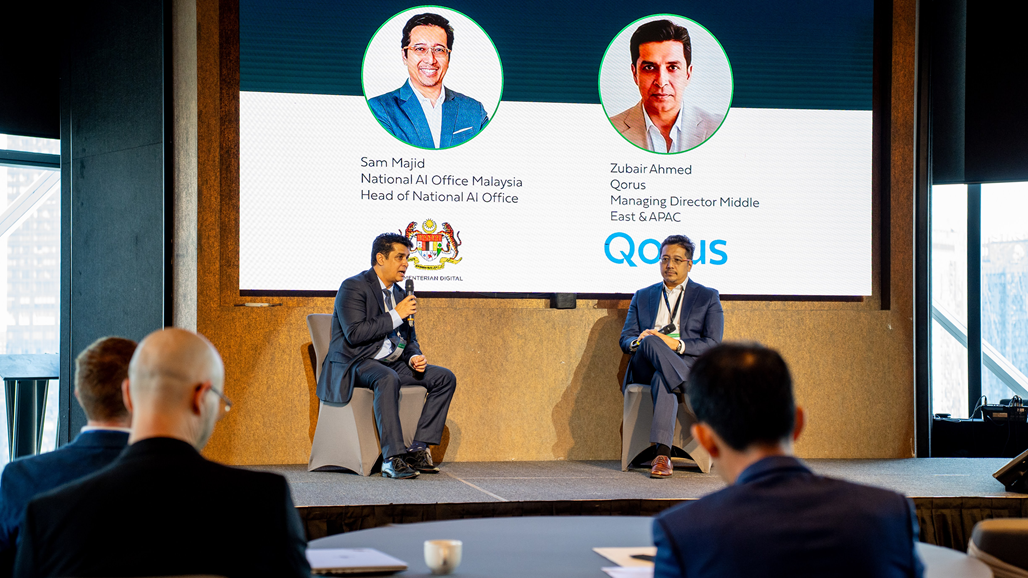
The discussion highlighted the need for better data governance and stronger institutional capabilities. Bank Negara Malaysia is working to stay ahead of developments, but must balance innovation with financial stability. The session made clear that regulatory frameworks are evolving, but execution remains uneven.
09:35 PRESENTATION: How to Design AI Strategies That Actually Scale Across Regions and Functions by Pattarakit Saingarm, Assistant VP, Enterprise Data & AI Strategy at Kasikornbank
The presentation argues that while AI adoption in banking has surged dramatically, particularly with generative AI growing from roughly 5% to 40% deployment in just one year, the actual return on investment remains weak. Only a small percentage of CEOs believe their AI initiatives are delivering strong revenue outcomes, highlighting a gap between experimentation and measurable business impact. The speaker attributes this to “FOMO-driven” adoption, where banks invest heavily in infrastructure without a clear strategic direction tied to customer value. A key issue identified is that many institutions treat AI as a bolt-on solution rather than integrating it into core processes. This results in faster execution of inefficient workflows rather than meaningful transformation. The presentation emphasizes that scaling AI requires a fundamental rethink of strategy, not just increased deployment. Without this shift, AI risks becoming an expensive layer of “digital lipstick” on outdated systems.
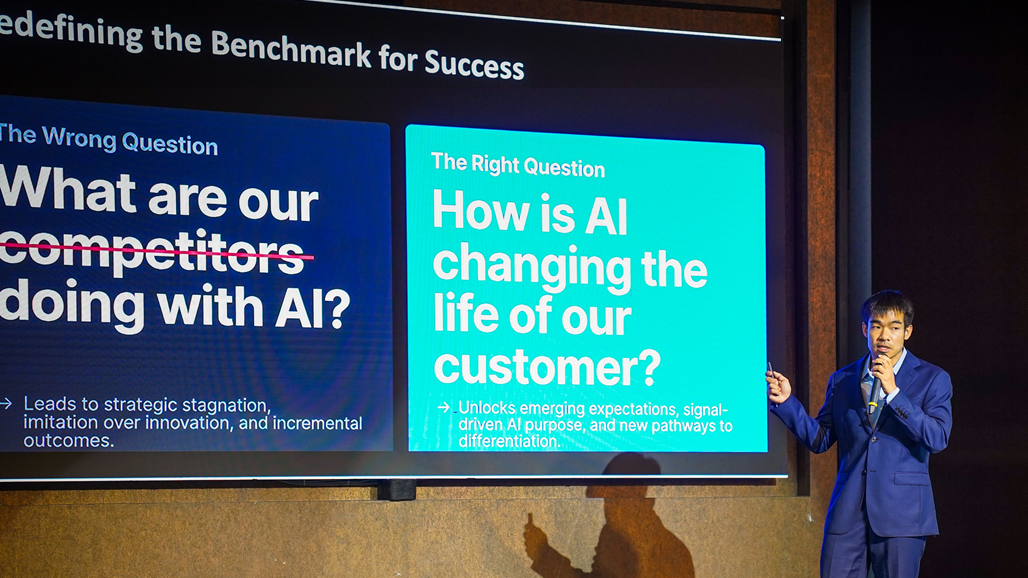
A central recommendation is to redesign operating models and change management approaches to enable true scalability. The speaker proposes a “hub-and-spoke” model, where a centralized AI Center of Excellence sets standards and governance, while regional units retain flexibility to adapt to local regulations and customer needs. This federated structure balances control with agility, which is critical in global banking environments. Additionally, organizations must move away from rigid, top-down decision-making toward more transparent and collaborative processes to reduce employee resistance and improve adoption. The presentation also stresses the importance of reengineering workflows using autonomous AI agents, rather than simply automating existing ones. Continuous iteration, experimentation, and validation are encouraged to ensure AI delivers real business value. Ultimately, success depends on aligning AI initiatives with customer-centric outcomes, organizational culture, and scalable governance frameworks. One important issue highlighted is scaling AI at the enterprise level, with particular attention to data management and overall AI strategy.
10:00 AI Native Banking The New Architecture of Customer Relevance by Sudhir Mishra, Interim Cchief Technology, Data and Digital Strategy Advisor at Community First Bank
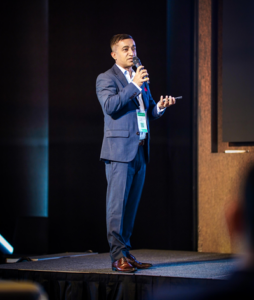 The presentation by Sudhir Mishra advocates for a fundamental shift from traditional AI experimentation to true AI-Native Banking, where AI is deeply embedded into the enterprise architecture rather than bolted onto existing processes. Most banks today remain stuck in a reality gap: while Generative AI promises significant value, a large majority of organizations are still limited to pilots, with many initiatives failing to deliver measurable business impact. AI-Bolted Banking relies on disconnected use cases, fragmented data views, and reactive decisions, resulting in limited ROI. In contrast, AI-Native Banking integrates AI across end-to-end customer journeys, enabling real-time decisioning, unified customer intelligence, predictive engagement, and a customer outcome-led operating model.
The proposed AI-Native Architecture rests on four interdependent layers: Engagement, Decision, Data + Core, and Operating Model + Governance. Leading institutions demonstrate success through enterprise-wide transformation, delivering productivity gains and economic value by prioritizing architecture and data unification. Hyper-personalization becomes achievable through improved engagement, stronger decision layers, richer data, and better operating models. However, key bottlenecks remain, including the growing energy demands of data centers and the complexity of large-scale transformation. The session also reflected on how future banks could operate with significantly leaner structures.
10:30 The Growth Ceiling in Islamic Banking: Why Good Customers Are Still Rejected by Eng Kok Chong, CEO at INFOPRO
The presentation explores a structural paradox within Islamic banking, where strong and creditworthy customers are still being rejected despite the sector’s ambition for growth. It argues that this limitation stems not from a lack of demand, but from rigid frameworks in risk assessment, product structuring, and Shariah compliance. Islamic banks often rely on conservative underwriting standards and legacy evaluation models that fail to fully capture the financial strength or potential of modern customers. As a result, many viable clients—especially SMEs and emerging segments—are excluded from financing opportunities. The speaker highlights that this issue creates an artificial “growth ceiling,” constraining both market expansion and financial inclusion.
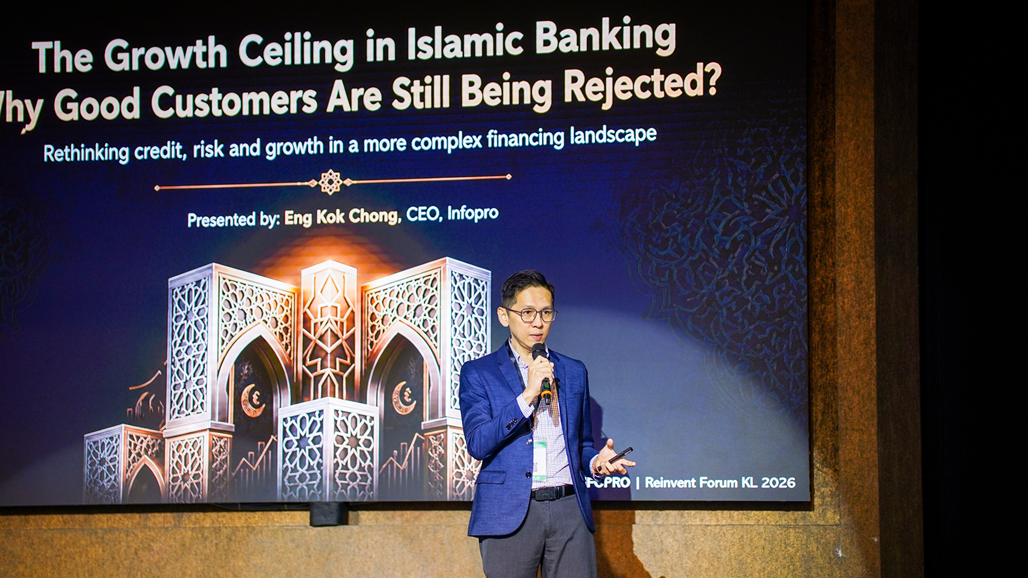
To overcome these challenges, the presentation advocates for a transformation in how Islamic banks assess risk and design financial solutions. Leveraging data, analytics, and AI-driven models can create more inclusive frameworks. Simplifying product structures while maintaining compliance is also critical. The journey toward AI-native banking will require systematization, cloud infrastructure, and the use of agentic AI to streamline processes and decision-making.
10:45 CASE STUDY: Your customer is already in the AI era. Is your bank too? By Marcin Piwowarczyk & Adrian Wojtasik
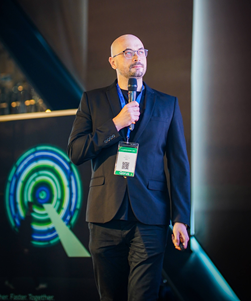 The presentation emphasizes that AI is already deeply embedded in customers’ everyday lives, often in invisible ways through apps, devices, and digital services. Customers interact with AI frequently, shaping expectations before they engage with banks. As AI becomes seamless, users expect intelligent, responsive systems without distinguishing between AI-driven and traditional services. This creates a perception gap where banks are assumed to be more advanced than they actually are.
In response, mBank presents its approach through conversational banking and AI-powered assistants capable of handling complex interactions and executing numerous actions. The strategy combines customer-facing innovation with internal transformation to improve efficiency and service quality. The goal is to deliver personalized value, sustainable lending, and increased revenue, moving beyond KPI-driven approaches toward meaningful customer impact.
11:45 SUSTAINABILITY CASE STUDY: ESG Practices Transforming the Manufacturing and Banking Sector by Roy Heong Beng Wai, Chief Sustainability Officer at Alliance Bank Malaysia Berhad
The presentation features a sustainability case study by Alliance Bank Malaysia, highlighting how ESG practices are transforming both the banking and manufacturing sectors, particularly for SMEs. It emphasizes that ESG is gaining importance due to policy support and the push toward renewable energy adoption. The bank’s Sustainability Impact Programme focuses on advocacy, advisory, and practical solutions.
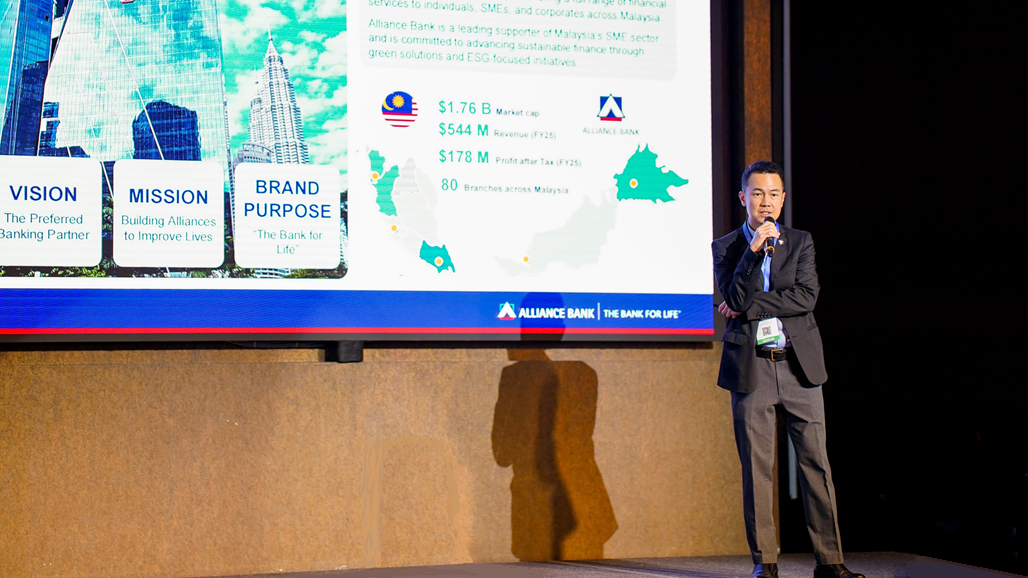
The case study shows how supply chains can accelerate ESG adoption and how SMEs benefit through cost savings and improved competitiveness. Banks can enhance credit assessment using ESG data and ecosystem insights. The importance of financial reporting standards (FRS) disclosures was also emphasized as part of the broader regulatory and transparency framework.
12:15 PANEL DISCUSSION: From Insight to Impact: How Leaders Drive Enterprise-Wide Digital Transformation with Sanat Rao, Founder and CEO at Within The Box.ai (Moderator), Quang Nguyen, CEO at Cake Digital Bank, Mujtanibul Ahmed, Chief Digital Officer at Meghna Bank, Abdul Raof Latiff, Managing Director & Country CEO at DBS Group and Velimir Stanojevic, Head - Digital Banking & Alternative Channels Transformation at Alizz Islamic Bank
The panel discussed how leadership drives enterprise-wide digital transformation. Quang highlighted how AI-native banks can scale lending rapidly, while Abdul shared insights on structured transformation models such as those used by DBS. Velimir emphasized the advantage of speed in AI, allowing faster experimentation and learning.
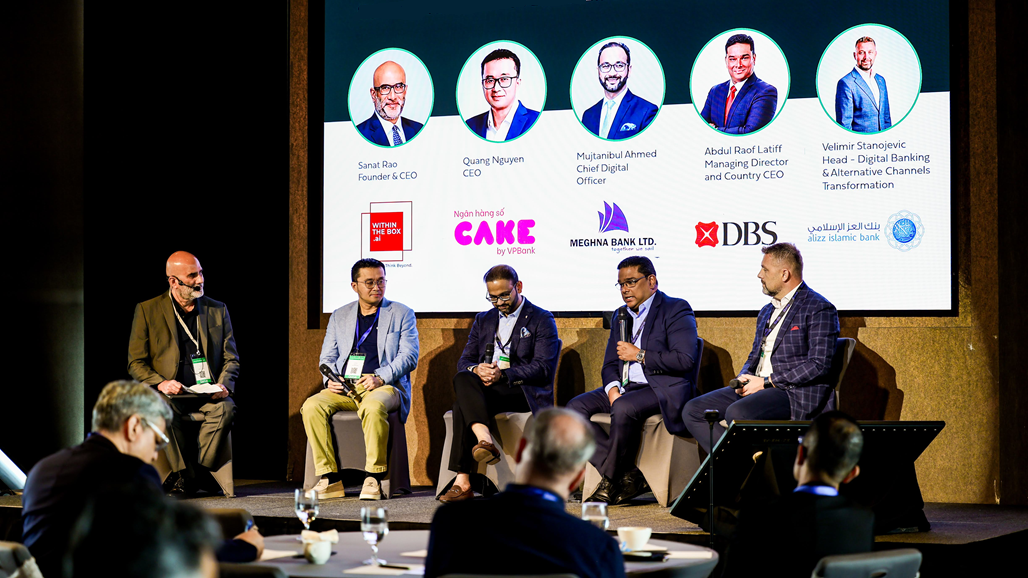
Mujtanibul pointed out that many boards still lack understanding of AI, leading to hesitation in investment. The discussion also highlighted DBS’s leadership in training employees and building strong business-technology partnerships. While compliance remains a constraint, the long-term vision is an “invisible bank” with seamless, continuous interaction between customers and the institution.
13:50 Redesigning Innovation Governance – From Experimentation to Enterprise Institutionalization by Sigit Prihatmoko, VP Corporate Innoovation Centre at Bank Negara Indonesia
The presentation outlines Bank Negara Indonesia (BNI)’s journey from a structured to a more systematic and enterprise-scale innovation model, emphasizing that innovation is not a standalone initiative but a core element embedded in its corporate vision and culture. BNI frames innovation as continuous improvement, linking employee behavior to long-term transformation and positioning it as a strategic mandate. As of 2026, the bank is transitioning to a higher level of innovation maturity supported by multiple programs covering ideation, capability building, and ecosystem engagement.
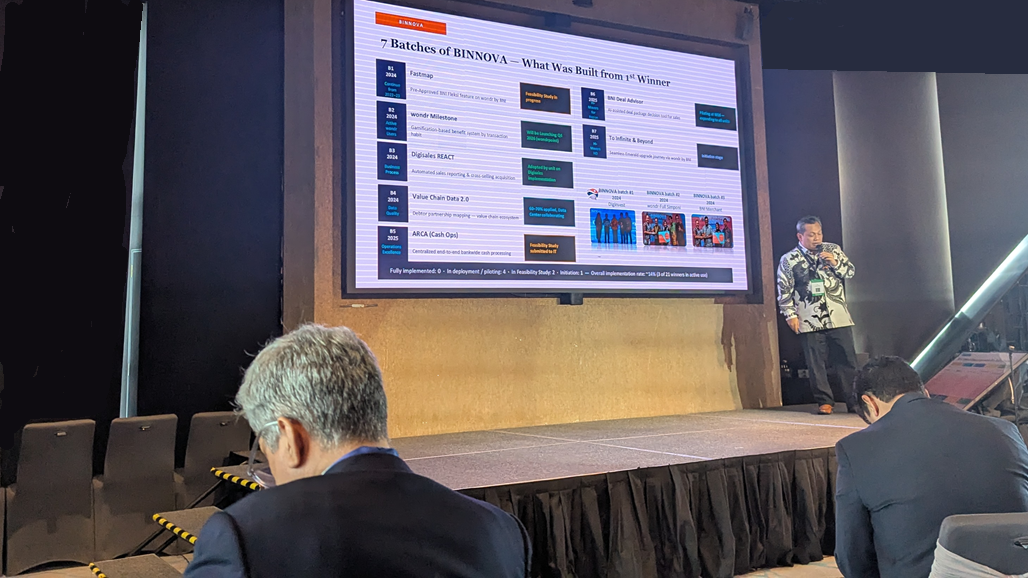
However, a significant “conversion gap” remains between idea generation and real business impact, with only a small percentage of ideas reaching implementation. Challenges include lack of ownership, late-stage governance involvement, unclear success metrics, and insufficient funding. The presentation highlights that sustainable innovation requires disciplined execution, strong governance, and clear accountability to translate ideas into measurable outcomes.
14:15 CASE STUDY: AI Use Cases and Trends for Banking and Finance by Shashank Pahade, VP at OCBC
The presentation featured the concept of “Agentic AI” as the next major transformation in banking, positioning AI not just as a tool but as a new workforce capable of autonomous decision-making at scale. It traces the evolution of AI in banking and highlights how leading institutions are already executing large volumes of AI-driven decisions across multiple use cases. AI reduces reliance on human intervention in routine processes while delivering significant productivity gains.
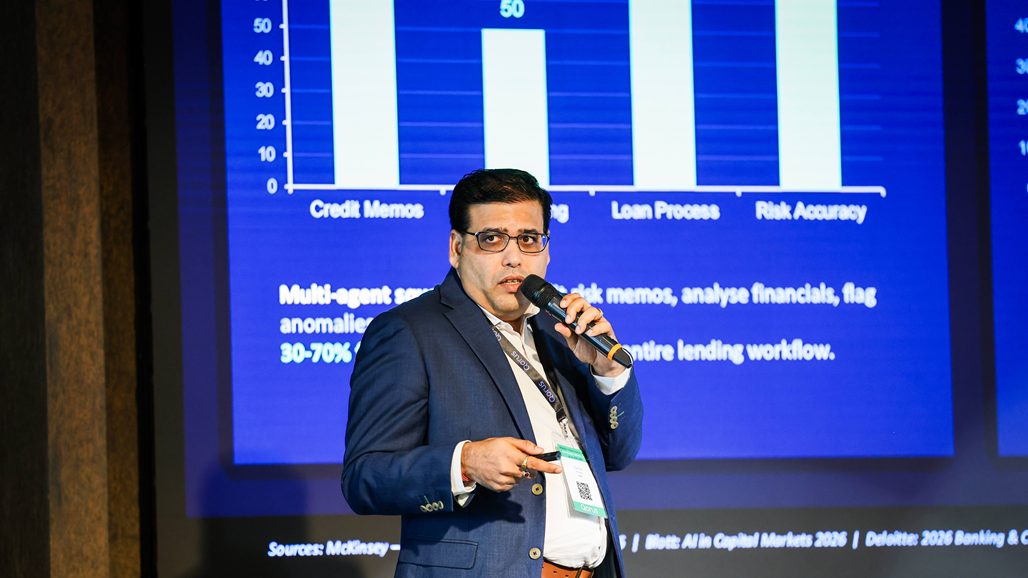
The session also outlined key battlegrounds where AI is reshaping banking, including fraud detection, lending, and personalization. While benefits are clear, the “governance paradox” remains central, as increased autonomy requires stronger oversight and transparency. The roadmap toward autonomous banking systems emphasizes governance, accountability, and strategic execution as critical success factors.
14:40 PANEL DISCUSSION: Is Banking Losing Its Humanity? With Jon Blakeney, Group Partner & Managing Director at 'i-am' (Moderator), Adrian Wojtasik, Deputy Director of the Digital Channels & User Experience Department at Mbank, and Lolitta Suffian, Sr. Vp at Bank Simpanan Nasional
I-AM's 2026 insight, "Humanity Unfiltered," highlights the growing challenge for banks to maintain human connection amid rapid digital and AI transformation. The discussion emphasized the importance of empathy, clarity, and supportive interactions across all customer touchpoints. While technology enhances efficiency, it also risks creating distance between institutions and customers.
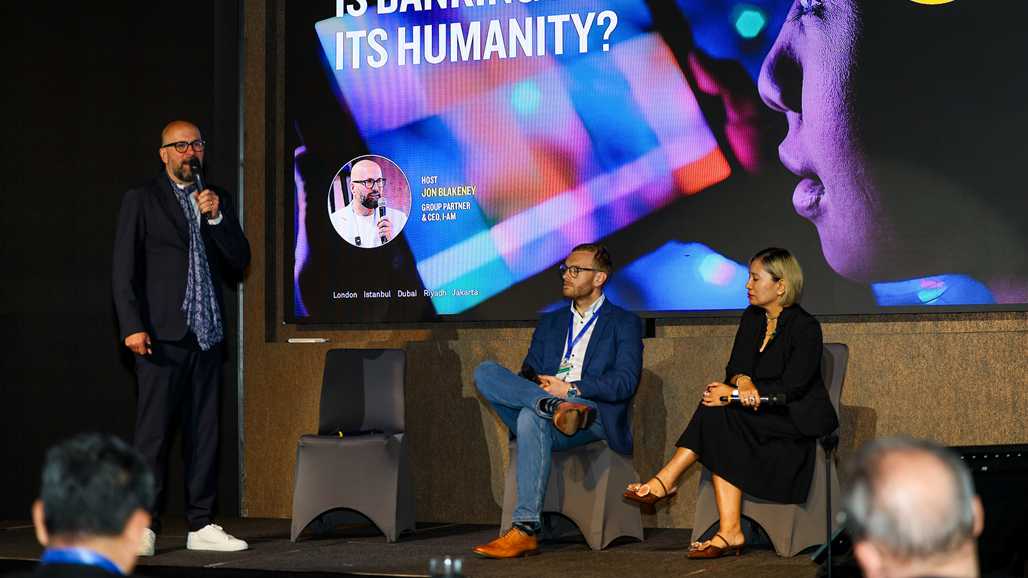
Examples from forward-thinking banks demonstrated how digital and physical experiences can be combined to maintain trust and engagement. The key takeaway is a shift from product-driven models to customer-centric support systems, ensuring that human guidance remains available in complex or sensitive situations. Designing for trust, simplicity, and emotional connection is becoming increasingly important.
15:15 Redesigning the Financial Industry Through Strategic Approaches by Özkan Erener, CEO at VeriPark
VeriPark's presentation "Unlocking Growth with SME Onboarding" addresses the persistent challenge of lengthy and expensive onboarding processes. Traditional approaches remain manual and inefficient, limiting banks’ ability to serve SMEs effectively. Technology plays a key role in expanding access, reducing costs, and enabling scalable engagement.
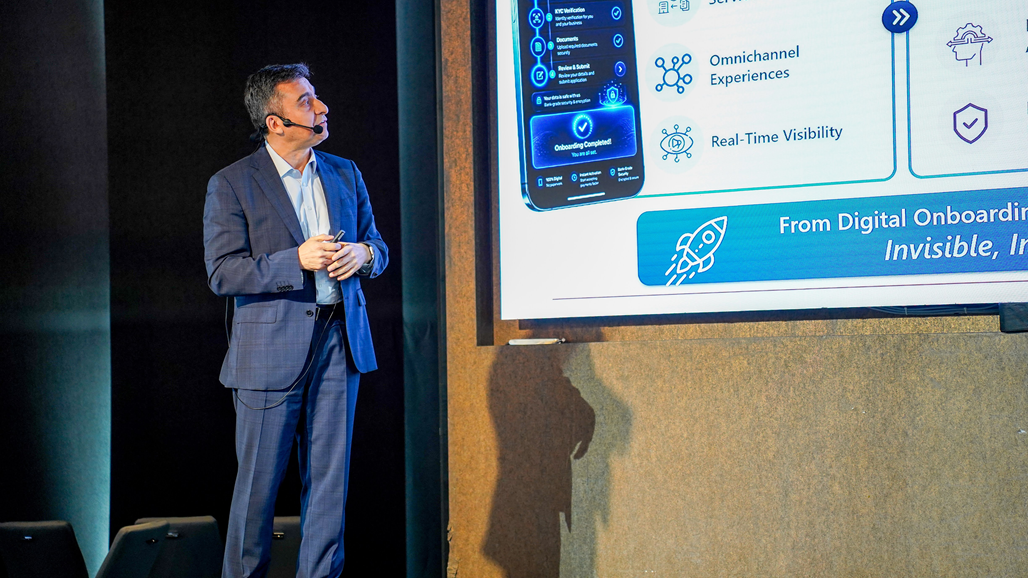
Case studies demonstrated significant improvements through automation, reducing onboarding time dramatically and lowering costs. The integration of digital frontends with intelligent, agentic backends allows for real-time decision-making and improved customer experience. The direction is toward seamless, automated onboarding that supports growth and operational efficiency.
15:45 PANEL DISCUSSION: Unlocking the Future of Insurance: Innovation, Technology, and Strategy for a Changing World with Sythan Prou, CEO at Forte Life Assurance, Patcharin Pratheeptham, EVP - Digital & Transformation at Muang Thai Life Assurance, Dipu KV, Sr. President at Bajaj General Insurance, and Mig Moreno, Deputy Secretary-Treasurer at ABA (Moderator)
The insurance market is resilient, showing moderate growth despite ongoing complexities. Property and casualty segments continue to provide stronger margins, while risks remain particularly in cyber and legal areas. The panel expressed cautious optimism about the future outlook.
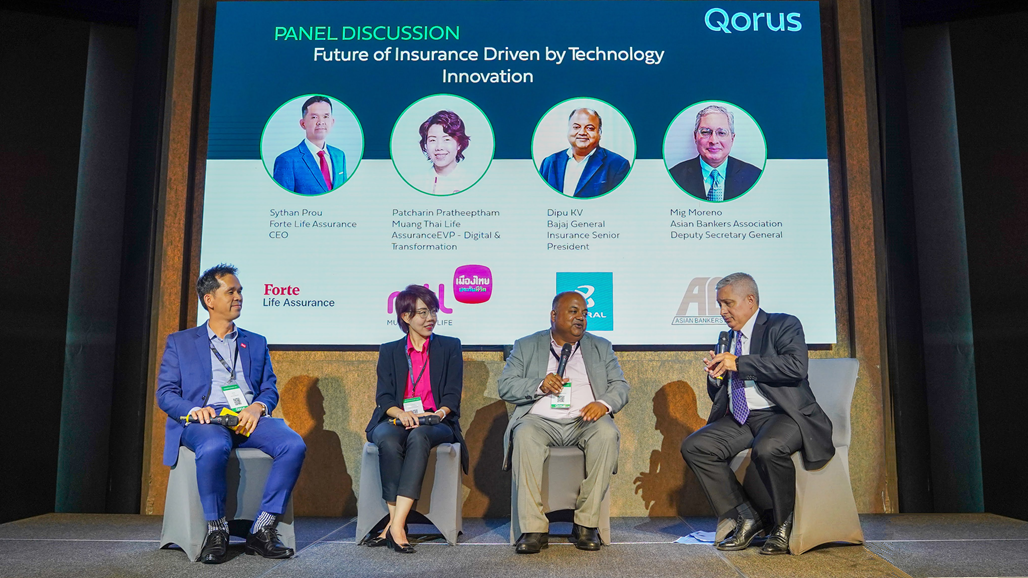
Speakers emphasized the need to expand cyber coverage, enhance cybersecurity capabilities, and develop more personalized products. Partnerships with private capital were also identified as important for growth. Overall, the industry is balancing traditional discipline with innovation, aiming to improve quality, reduce costs, and increase speed through the adoption of AI and new technologies.
16:15 CASE STUDY: Digital and green transformation: Enhancing physical assets for a sustainable future by Patrick Wu, Head of Innovation at Cathay Life Insurance
 Cathay Life's presentation outlines its strategy to enhance physical assets through the integration of digital technology, sustainable finance, and human-centric design. The company has been advancing both digital transformation and sustainability initiatives for over a decade, with a strong focus on ESG-driven decision-making and low-carbon investments.
Through its “hub” platform, Cathay integrates sustainability, technology, and user experience to create efficient and responsive environments. Smart building solutions and innovative asset management approaches have delivered strong results, including higher occupancy and premium positioning. The model demonstrates how sustainability and technology can jointly drive long-term value creation.
16:40 KEYNOTE: Convergence in Commerce – Powering SME Growth in a Digital-First ASEAN by Lawrence Loh, Co-CEO of CIMB Group Commercial and Transaction Banking at CIMB
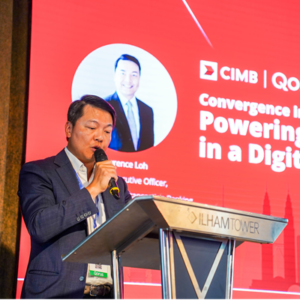 The keynote focused on the importance of SMEs in driving economic growth in ASEAN. AI presents a significant opportunity to support SMEs through real-time services and improved financial access. However, SMEs continue to face revenue volatility and financing constraints.
The discussion emphasized the need for banks to provide more flexible and responsive financial solutions. AI can play a key role in enabling this transformation, improving both access and efficiency. Supporting SMEs effectively remains a critical priority for the region.
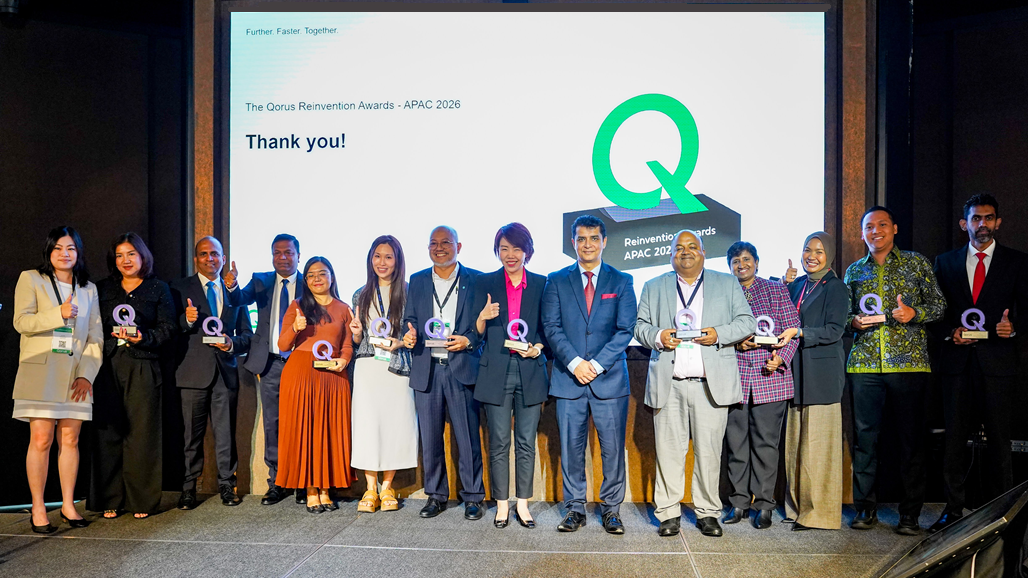
17:30 Qorus Reinvention Awards - APAC 2026 with Michael Lor, Sr. Advisor, Asia Pacific at Global ESG Leadership Organization
Many members of the Asian Bankers Association, received awards for excellence in different categories. Fubon Taipei Bank received a Distribution Silver Award and Environmental, Social, and Governance Bronze Award, Taiwan Business Bank received a Customer Experience Bronze Winner Award, Maybank received Awards for Humanizing Financial Services and APAC Innovator of the Year Gold Winner, DBS also received an Award for Operations & Workforce Transformation Silver Winner and Hatton National Bank received an Award for A Winning Customer Onboarding Journey. The awards recognize innovation, performance, and impact across the banking sector.
The ceremony highlighted the importance of continuous innovation and measurable results. It also reinforced the role of regional collaboration in advancing banking transformation. Recognition at this level reflects strong institutional commitment to change.
29 April 2026
09:30 AI-Driven Community Meetup with Shashank Pahade, VP at OCBC, Kelferd Hor, Digital Innovation Leader (Banking), Kho Wie Ang, Sr. Manager, AI & Data at Deloitte Southeast Asia, Adrian Wojtasik, Deputy Director of the Digital Channels & User Experience Department at Mbank, Marcin Piwowarczyk, Chief Product Owner at mBank, and Sanat Rao, Founder and CEO at Within The Box.ai (Moderator)
The AI Meetup in Kuala Lumpur started with a presentation of Kho Wie Ang from Deloitte Southeast Asia that focused on key trends, emphasizing efficiency, customer experience, and capability development as core drivers of value. He argued that AI is increasingly embedded across banking functions, from fraud detection to personalized customer engagement
The initial presentation proposed an idea of the future of banking experiences through AI, that in turn ignited an-depth discussions among the speakers and the audience.
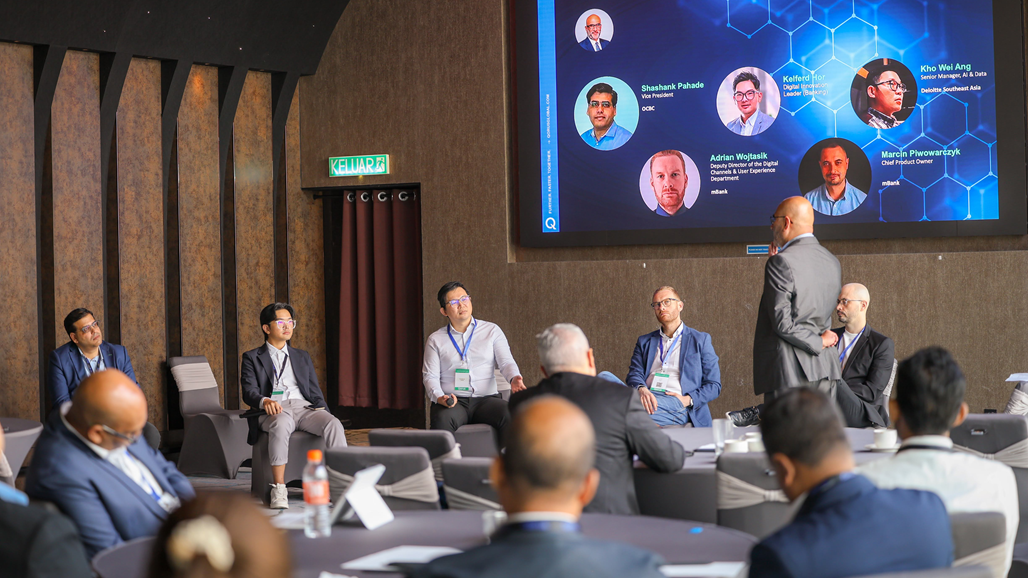
Speakers highlighted practical applications and tangible outcomes, including faster processes, improved customer satisfaction, and enhanced data utilization. At the same time, they stressed the importance of governance, data quality, and regulatory alignment. The session reinforced that embedding AI into core processes—not treating it as an add-on—is critical for success.
Additional insights emphasized the importance of transparency, explainability, and customer trust. The concept of consent and customer control over data was highlighted, alongside the need for human oversight in high-impact decisions. Overall, AI is seen as both an efficiency driver and a catalyst for new business models.
09:30 Islamic Finance Leaders Roundtable with Sigit Prihatmoko, VP Corporate Innoovation Centre at Bank Negara Indonesia, Mujtanibul Ahmed, Chief Digital Officer at Meghna Bank, Dean Gillespie, CEO at Islamic Money Australia, Zubair Ahmed, MD Middle East & APAC at Qorus (Moderator), Özkan Enerer, CEO at VeriPark, Raja Mohamad Shahadan, CFO at International Centre for Education in Islamic Finance (INCEIF), Eng Kok Chong, CEO at INFOPRO, Ja'afar Bin Riha, Head of Islamic Finance at Labuan Financial Servicies Authority, and Dato’ Matthew Chuah, Executive Director & Strategic Advisor at Infopro Sdn Bhd
The Islamic Finance Leaders Roundtable brought together industry experts to discuss innovation, digital transformation, and Sharia compliance. The sector continues to grow rapidly, with strong potential in Southeast Asia and the Middle East, but faces challenges such as standardization and operational complexity.
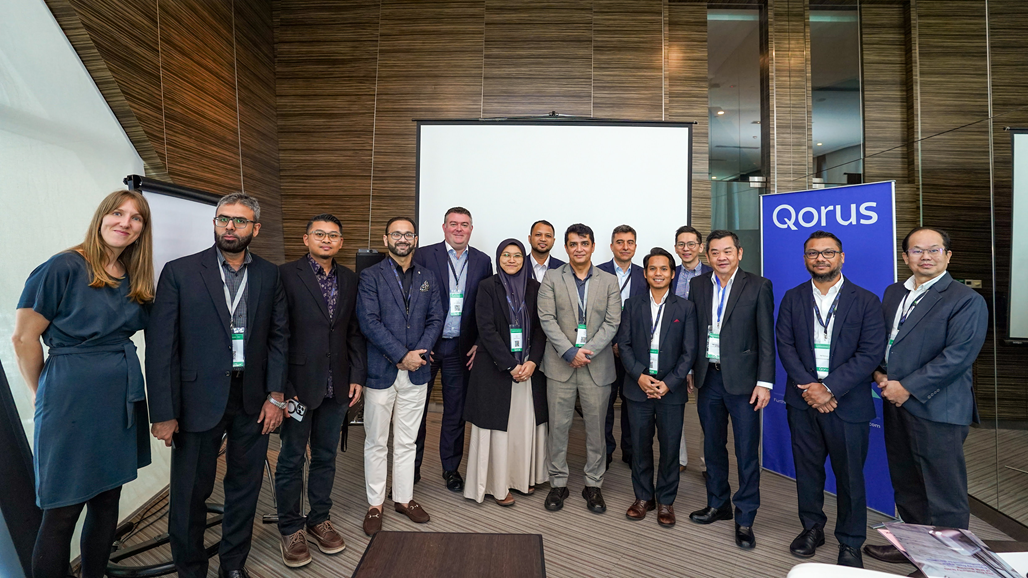
AI and digital technologies present opportunities to enhance personalization, improve compliance, and expand financial inclusion. Examples of AI-driven tools demonstrate how institutions can scale operations while maintaining Sharia principles. The discussion emphasized the importance of ethics, transparency, and governance.
The roundtable concluded that successful transformation requires strong leadership, ecosystem collaboration, and a clear alignment between technology and Sharia values. Building trust and ensuring explainability remain central to long-term growth.